Why your 10 years of split system experience may work against you
Installing split systems without a qualification accumulates risk over time. Learn how the Certificate II protects your trade history and business.
The assumption that costs experienced installers
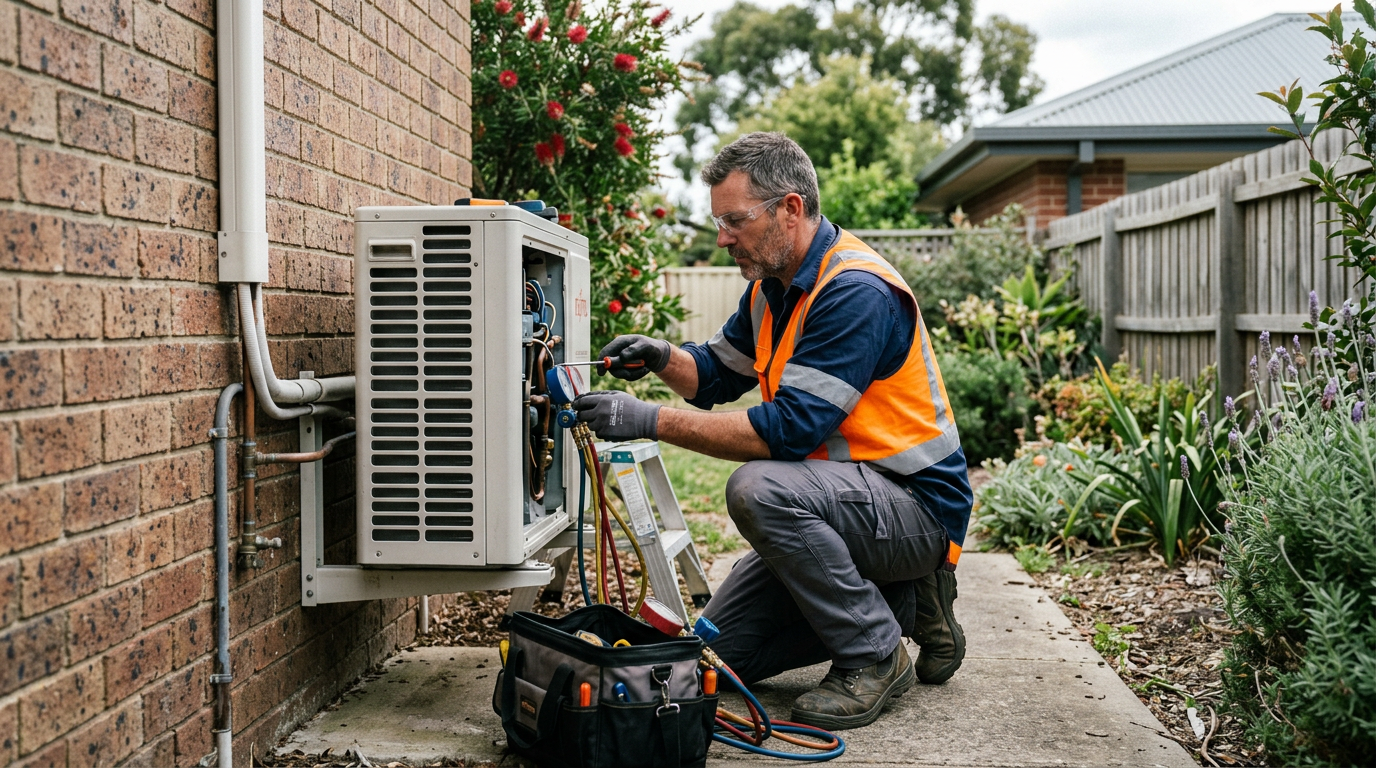
You have the experience. Hundreds of split system installations. Jobs completed cleanly, customers satisfied, and no callbacks. You know the work: the pipe runs, the refrigerant handling, the electrical connections, and the commissioning sequence. You have done it so many times it is second nature.
And somewhere in the back of your mind, that track record feels like protection. The longer you go without an incident, the more it confirms what you already know: you are good at this.
That assumption is understandable. It is also what may be working against you.
This is not about doubting your competence. It is about a regulatory reality that most experienced installers have never had reason to examine, until a regulator, an employer, or an insurer demands proof.
The paradox: more experience, more risk
Here is the reality: the longer you operate without the Certificate II in Split Air Conditioning and Heat Pump Systems, the more risk you accumulate, not less.
This is not a scare tactic. It is how compliance liability works. Each year of uncertified practice is another year of potential non-compliance that cannot be retroactively erased. The risk does not reset. It compounds.
There are three distinct reasons for this. Understanding them is the first step toward addressing them.
1. Your habits may have drifted from current standards
Australian standards for electrical work, including split system installation, are updated periodically. The way a job was done correctly ten years ago may not fully align with how it must be done today.
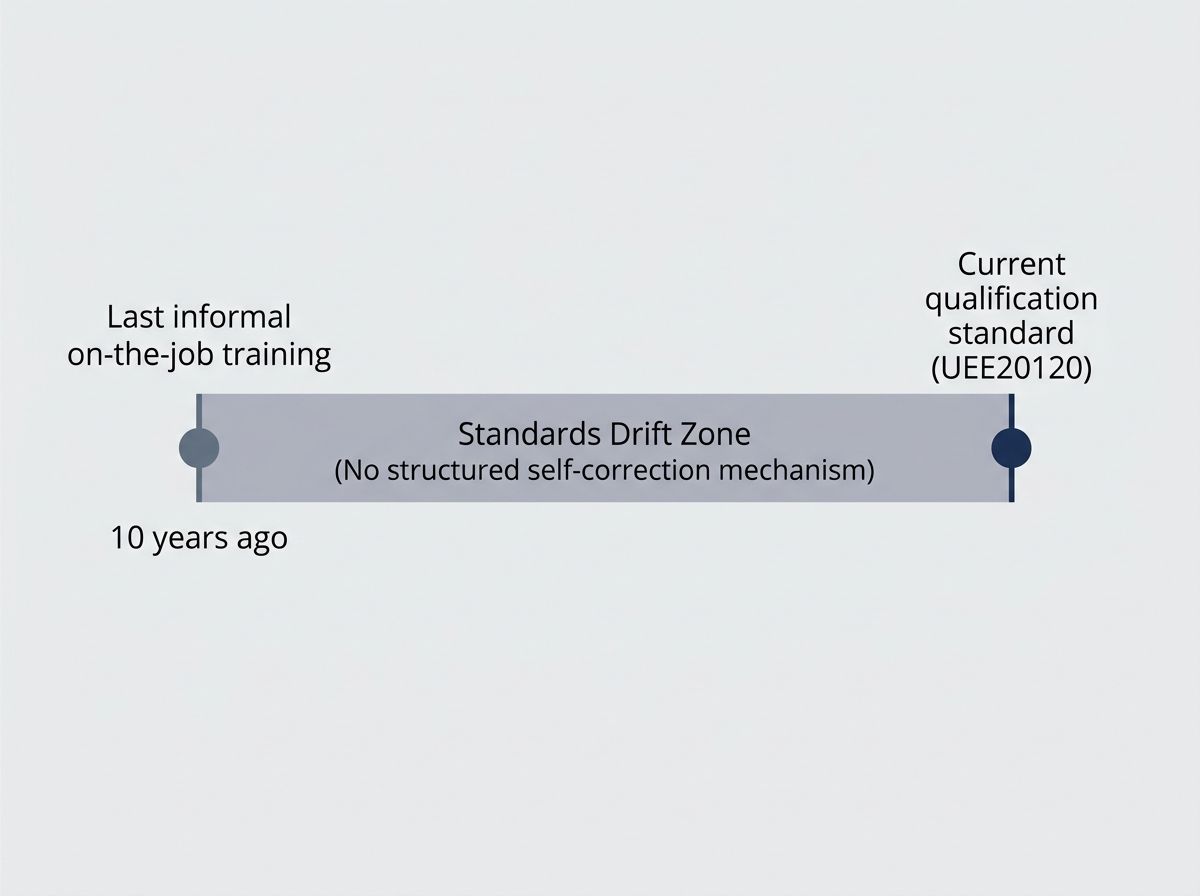
When you learned on the job, you learned from whoever trained you at that point in time. That knowledge was accurate then. But informal learning has no built-in correction system. There is no moment where someone taps you on the shoulder and says the standard changed and here is what is different.
Formal assessment does exactly that. It checks your practice against the current version of the relevant standards, not the version from when you started. For an experienced installer, this is not about learning new skills. It is about confirming that the skills you already have still align with what the standards require.
The uncomfortable reality is that the more confident you are in your existing habits, the harder it is to notice if anything has drifted. Confidence without external validation has no way of correcting itself.
If you have been wondering what the UEE20120 assessment actually involves for someone with your level of experience, this article covers it directly.
2. Every year without the qualification is another year of audit exposure
When a compliance issue arises, whether it is a regulator inquiry, an insurance claim, or an employer audit, the scrutiny does not necessarily stop at the most recent job. It can extend to your history of work in that trade.
An installer who has been operating without the required qualification for one year has one year of potential exposure. An installer who has been operating for ten years has ten years of it. The liability window grows with every job completed without the formal credential.
Most trade insurance policies require the holder to be appropriately licensed or qualified for the work they perform. If a claim arises from work completed without the required qualification, coverage may be affected. This is worth confirming directly with your insurer, but it is a question to ask before a claim, not after.
The point is not to create alarm. The point is that waiting does not reduce your exposure; it increases it.
3. The false-confidence trap
This is the most subtle of the three issues, and in some ways the most important.
When you have completed hundreds of split system installations without a complaint, you have strong evidence in your own experience that you are doing it right. That confidence is earned. It reflects real skill and real care.
But confidence built entirely on your own track record has a structural limitation: it has never been tested against an external standard. You know what you know. You do not know what you do not know.
This is not a criticism. It is a feature of how informal expertise develops. When you learn on the job, you learn what works in the situations you encounter. You do not necessarily learn what the standard requires in situations you have not encountered, or what has changed since you last updated your knowledge.
The Certificate II is not a threat to your confidence. It is what validates it, or, if something has drifted, corrects it before that drift becomes a problem.
What the Certificate II actually does for an experienced installer
Here is what the Certificate II in Split Air Conditioning and Heat Pump Systems is not, for someone with your experience: it is not a classroom course. It is not starting from scratch. It is not re-learning the basics you mastered years ago.
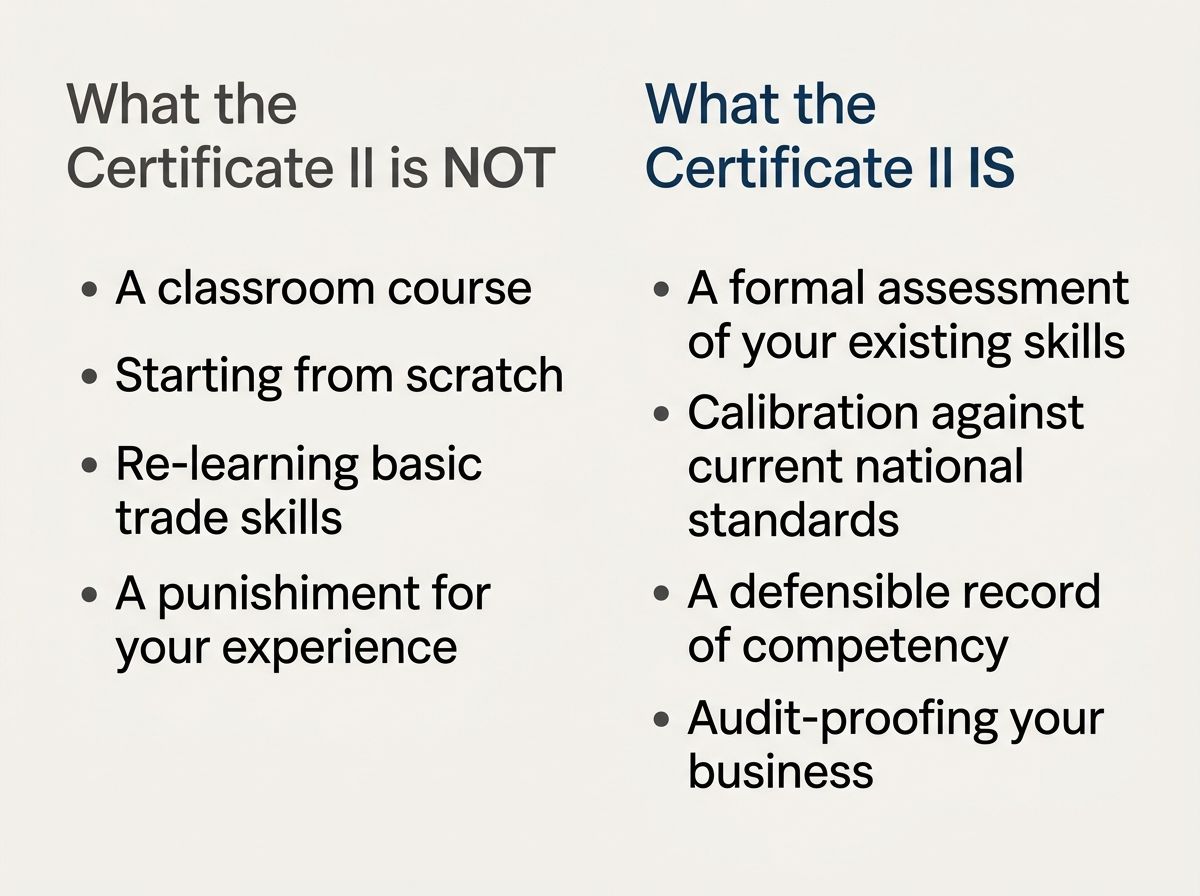
Here is what it is: a formal assessment of the skills you already have, checked against the current requirements of the qualification. For experienced installers, the pathway is Recognition of Prior Learning (RPL). Rather than completing training, you demonstrate your existing competence through evidence: records of past work, employer or supervisor statements, photos of completed installations, and a structured assessment process conducted by a qualified assessor from a registered training organisation.
The qualification is nationally recognised because the assessment is genuine. It is not a rubber stamp. It is a rigorous process that confirms your skills meet the required standard. For an experienced installer, that confirmation is the point: it is the security that years of uncertified practice cannot provide.
It is also worth being direct about what the Certificate II does in practical terms. It closes the compliance gap. It satisfies employer and site requirements. It brings your insurance position into line with the work you are doing. And it creates a formal record of competence that protects you if your work is ever scrutinised.
For a clear picture of what employers and sites are now requiring, and why the cert has become non-negotiable on many jobs, this article is worth reading.
You can find the full details of the Certificate II in Split Air Conditioning and Heat Pump Systems (UEE20120) here.
Are you suitable for RPL?
Not every experienced installer will be suitable for RPL, and it would not serve you to pretend otherwise.
RPL is appropriate for candidates who have substantial, documented experience in the relevant work. For the Certificate II in Split Air Conditioning and Heat Pump Systems, that generally means a meaningful track record of hands-on split system installation work, not a handful of jobs, but a body of experience that can be evidenced through records, references, and demonstrated competence.
It also means being willing to engage with a genuine assessment process. RPL is not a formality. A qualified assessor from the delivering registered training organisation will review your evidence and make a professional judgement about your competence. That judgement is independent, not something RPL it controls or determines.
In some cases, gap training may be identified during the assessment process. If that happens, it is provided at no additional cost. The goal is to get you to the qualification through the most appropriate pathway, not to enrol you in something that does not fit your situation.
If you are genuinely unsure whether your experience is sufficient, the honest answer is to find out before you commit to anything.
The first step costs nothing and commits you to nothing
You have the experience. The question is whether that experience is sufficient for RPL, and whether the three risks described in this article apply to your situation.
A Free Skills Review is the place to find out. It is free. There is no obligation. It is an honest assessment of where you stand, conducted before any enrolment decision is made. If RPL is the right pathway for you, you will know. If it is not, you will know that too.
The decision is yours.
Ready to Get Recognised?
Start with a free skills review to find out if RPL is right for you.