You Aren't Unqualified, You're Just Undocumented: Reframing the RPL Certificate
Years of experience but no formal certificate? You're not unqualified — you're undocumented. Here's how an RPL certificate changes that framing entirely.

The word 'unqualified' is doing a lot of damage
You have the experience. The system just doesn't have a record of it.
Somewhere along the way, a word got attached to skilled workers who built their expertise on the job rather than in a classroom. That word is 'unqualified'. And it does a particular kind of damage — not because it describes a lack of skill, but because it implies one.
Think about what the word actually means in practice. It means a job application gets filtered out before a human reads it. It means a promotion goes to someone with less experience and the right piece of paper. It means a tender requires documentation you don't hold, for work you've been doing for a decade.
None of that is a judgment of your capability. It is a description of a documentation gap. The system requires evidence in a specific format. Your evidence exists — it just hasn't been translated into that format yet.
That distinction matters. Because if the problem is a documentation gap, the solution is documentation. Not re-learning. Not starting over. Not sitting in a classroom to be taught what you already know.
You aren't unqualified. You're undocumented. Those are very different problems with very different solutions.
What 'qualified' actually means in the Australian system
Here is the counterintuitive insight that most experienced workers never encounter: in the Australian vocational education and training system, a qualification is a formal record of assessed competency — not proof of study.
The system is designed to assess what you can do, not how you learned to do it. The pathway to competency — whether that was a formal apprenticeship, years on the tools, or a combination of both — is not what gets assessed. The competency itself is what gets assessed.
This is the foundation of Recognition of Prior Learning, or RPL. It is a formal assessment pathway within the Australian qualifications framework that allows a registered training organisation (RTO) to assess your existing competency and issue a nationally recognised qualification based on that assessment. The qualification is identical to one issued through traditional study. It carries the same national recognition. It is not a lesser credential.
RPL is not a workaround or an exception. It is a built-in feature of how the Australian VET system is designed to work — a recognition that competency can be acquired in multiple ways, and that the formal record should reflect the competency, not the pathway.
The real problem: your evidence exists in the wrong format
Your competence is not missing. It is stored in the wrong format.
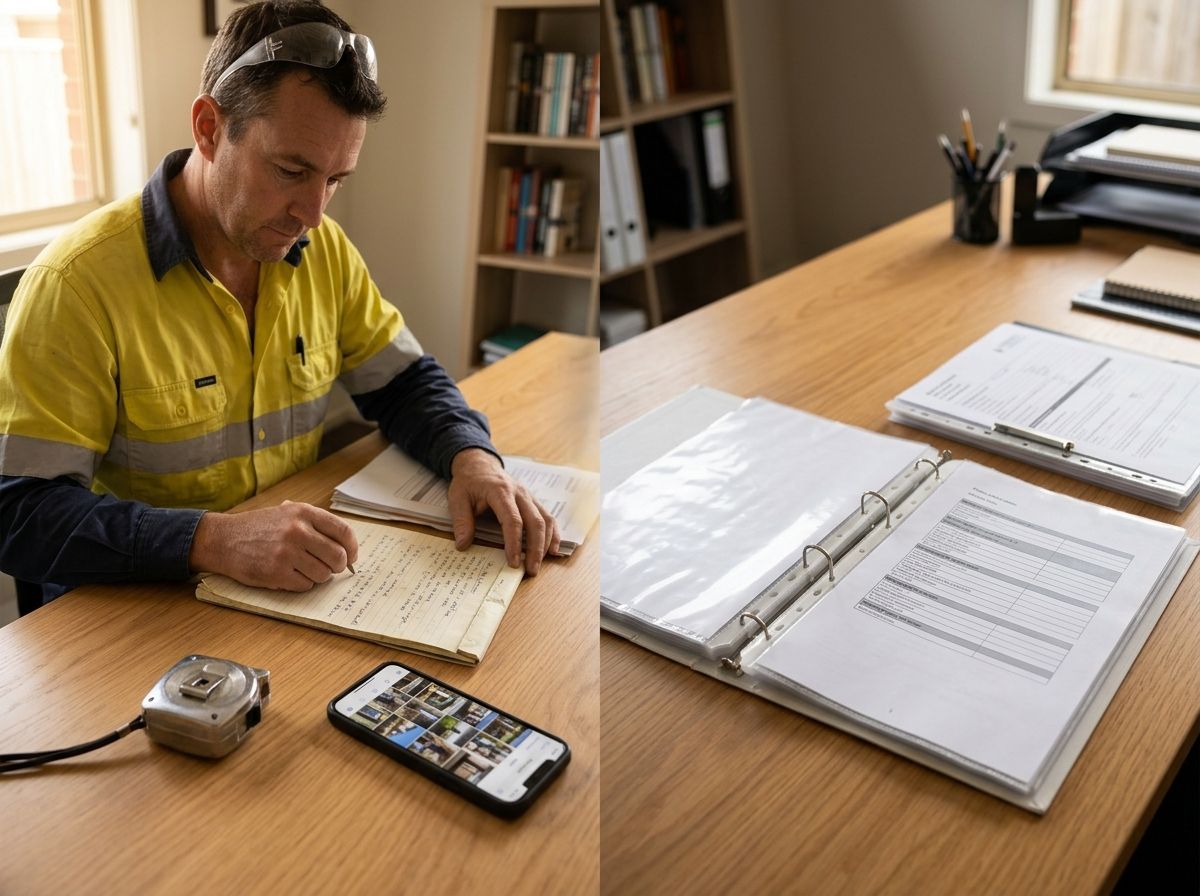
It lives in the decisions you made under pressure. In the problems you solved before anyone else knew there was a problem. In the people you trained, the projects you delivered, the standards you held without being asked to. It lives in muscle memory and professional judgement built over years of real work.
The formal system requires that evidence to be translated. Not invented — translated. Structured, documented, and presented in a form that an assessor can evaluate against specific competency standards.
You solved the problem. You led the team. You delivered the outcome. None of it is on paper.
That is the gap. Not capability. Translation.
When an RTO assessor evaluates an RPL application, they are looking for evidence that maps to specific competency units within a qualification. That evidence can take many forms: records of work completed, references from employers or supervisors, photographs of projects, logbooks, professional development records, or responses to structured questions about how you approach specific tasks. The evidence already exists in your work history. The process is about gathering it, organising it, and presenting it in the format the assessment requires.
This is why 'translation' is more accurate than 'study'. You are not acquiring new knowledge. You are converting existing evidence into a language the formal system understands.
What an RPL certificate actually is — and what it isn't
An RPL certificate is a nationally recognised qualification issued by a registered training organisation following a formal assessment of your existing competency.
It is not a shortcut. It is not a workaround. It is not a lesser version of a qualification earned through traditional study. It is a rigorous assessment pathway that sits within the same regulatory framework as any other qualification — and it produces the same nationally recognised outcome.
The assessment is conducted by a qualified assessor from the delivering RTO. That assessor's judgement is independent. They will evaluate your evidence against the competency standards for the qualification. If gaps are identified — areas where your evidence doesn't yet demonstrate the required competency — gap training may be required before the qualification can be issued. This is not a failure of the process. It is the process working as it should.
The qualification that results from a successful RPL assessment is nationally recognised because the assessment is genuine. That is what makes it worth having.
What an RPL certificate is not: it is not something you can purchase, order, or obtain without genuine assessment. It is not available to everyone — suitability depends on the nature and depth of your experience, the recency of your practice, and your ability to provide structured evidence. Honest suitability assessment before enrolment is not a limitation. It is the foundation of a trustworthy process.
The mental shift that changes everything: from 'getting qualified' to 'claiming recognition'
The conventional framing — 'I need to get qualified' — positions you as deficient. It implies that something is missing, that you need to acquire something you don't currently have, that the qualification is a destination you haven't yet reached.
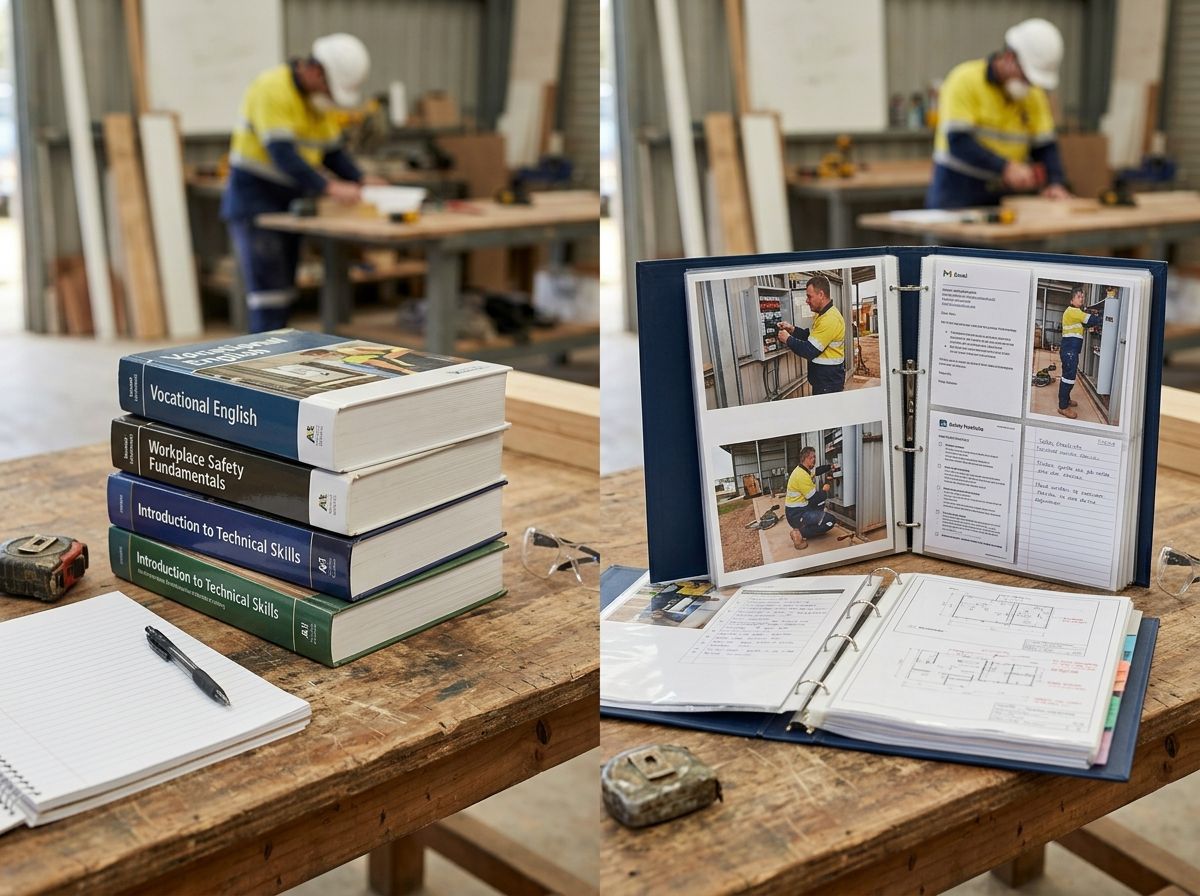
The reframe is this: you don't need to get qualified. You need to claim recognition for what you already know.
That is not semantic wordplay. It changes what the process requires of you. It changes what evidence you gather. It changes how you approach the assessment. And it changes how you feel about the whole thing.
Experience can be evidence.
Experience is not less than education. It is a different form of evidence. The Australian VET system, through the RPL pathway, acknowledges this. The question is not whether your experience counts — it is whether your experience has been documented in a form the system can assess.
Recognition, not repetition. That is what the RPL pathway offers. Not a return to the classroom to re-learn what you already know. A structured process to present what you already know in the format the system requires.
What the RPL process actually looks like for an experienced worker
The RPL process is not a classroom. It is a structured assessment of existing competency, guided by an RTO assessor, using evidence drawn from your actual work history.
In broad terms, the process typically involves an initial skills review to assess whether your experience is likely to map to the qualification you're pursuing. If it does, you move into evidence gathering — working with your guide to identify, collect, and organise the evidence that demonstrates your competency against the relevant units. That evidence is then submitted to the RTO assessor for formal evaluation.
The assessor reviews your evidence against the competency standards. Where your evidence clearly demonstrates competency, those units are recognised. Where gaps exist, gap training may be required — and at RPL it, that gap training is provided at no additional cost.
This is not something you navigate alone. The guided pathway exists because the process is unfamiliar to most people approaching it for the first time. The formal system has real complexity. The role of a guide is to make it navigable.
Duration varies. The process depends on the qualification, the depth of your experience, and how readily your evidence can be gathered and structured. Duration estimates are indicative, not promised. The assessor's judgement is independent.
What the process does not require: sitting in a classroom, repeating learning you've already done, or starting from zero. Your time is respected. Your prior investment is honoured. Your expertise is assessed.
Understanding how to present your experience as assessable evidence is one of the most practically useful things you can do before starting the process.
Is this pathway right for you? Honest guidance before you commit
RPL is not suitable for everyone. That is not a caveat buried in fine print — it is worth saying plainly, because honest suitability guidance is more useful to you than a process that enrols anyone who enquires.
The pathway is most likely to be suitable if you have substantial, recent, hands-on experience in the field the qualification covers. If you can point to real work — projects completed, tasks performed, decisions made — that maps to the competency standards of the qualification. If you have access to evidence: employer references, work records, documentation of what you've done.
It is less likely to be suitable if your experience is limited, very dated, or in a field significantly different from the qualification you're pursuing. The assessment is genuine. The evidence requirements are real.
The Free Skills Review exists to answer the suitability question honestly, before you commit to anything. It is a no-obligation conversation about your experience and whether it maps to a formal pathway. We would rather guide someone to the right pathway than enrol them in the wrong one.
The decision is yours.
The reality of working without formal recognition — and what it costs over time — is worth understanding clearly before you decide whether to act.
If you want an honest assessment of whether your experience qualifies for an RPL pathway, the place to start is a free, no-obligation skills review. It costs nothing. It requires no commitment. And it gives you an honest answer about whether this pathway is right for your situation.
Explore the RPL qualifications available across a wide range of industries and experience levels.
Ready to Get Recognised?
Start with a free skills review to find out if RPL is right for you.