The moment you realise your skills aren't enough without the paperwork
Turned away from a site without a licence? An RPL certificate lets your trade experience count without classroom study. Here is how the process works.
The moment everything stops
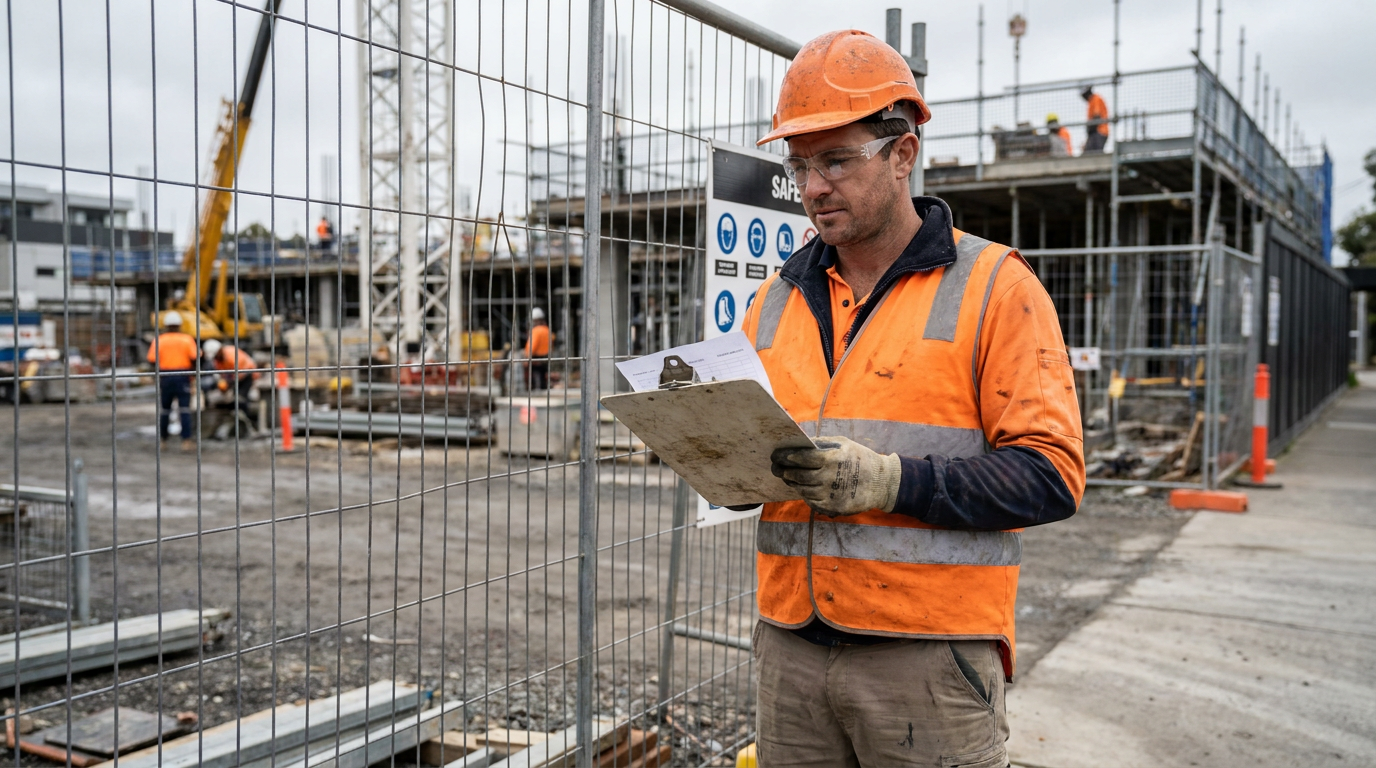
You have the experience. You have done this work for years on site, under pressure, to a standard that speaks for itself. Then comes the moment that stops everything: a site induction where the supervisor asks for your licence number and you do not have one. Or a letter from a licensing authority. Perhaps a tender you cannot submit because the client requires proof of qualification. The work is there and you know how to do it, but the paperwork is missing. Right now, that is the only thing that matters.
This is more than a career frustration; it is an operational shutdown. It happens to skilled tradespeople across Australia who are competent, experienced, and legally exposed. They do not lack ability, but their ability exists in a form that the formal system does not recognise.
You know the work. The system doesn't know you.
Your competence is real. The years on the tools, the problems solved, and the jobs completed to specification do not disappear just because a regulator cannot see them. Your skill is not the issue. The issue is that formal systems, including licensing authorities, principal contractors, and insurers, require evidence in a specific format. They need a certificate number, a nationally recognised qualification, or something they can verify directly.
Without that proof, your years of experience are invisible to the system because they have not been formally assessed and recorded. As one framing puts it, you are not unqualified, you are simply undocumented.
We have explored this framing in detail in another article on this site.
The gap between what you can do and what the system can see is the exact problem an RPL certificate is designed to close.
What an RPL certificate actually is (and what it is not)
An RPL certificate, or more precisely a qualification obtained through Recognition of Prior Learning, is a nationally recognised qualification issued by a Registered Training Organisation (RTO). The RTO formally assesses your existing skills and experience against the requirements of a qualification, without requiring you to re-learn what you already know.
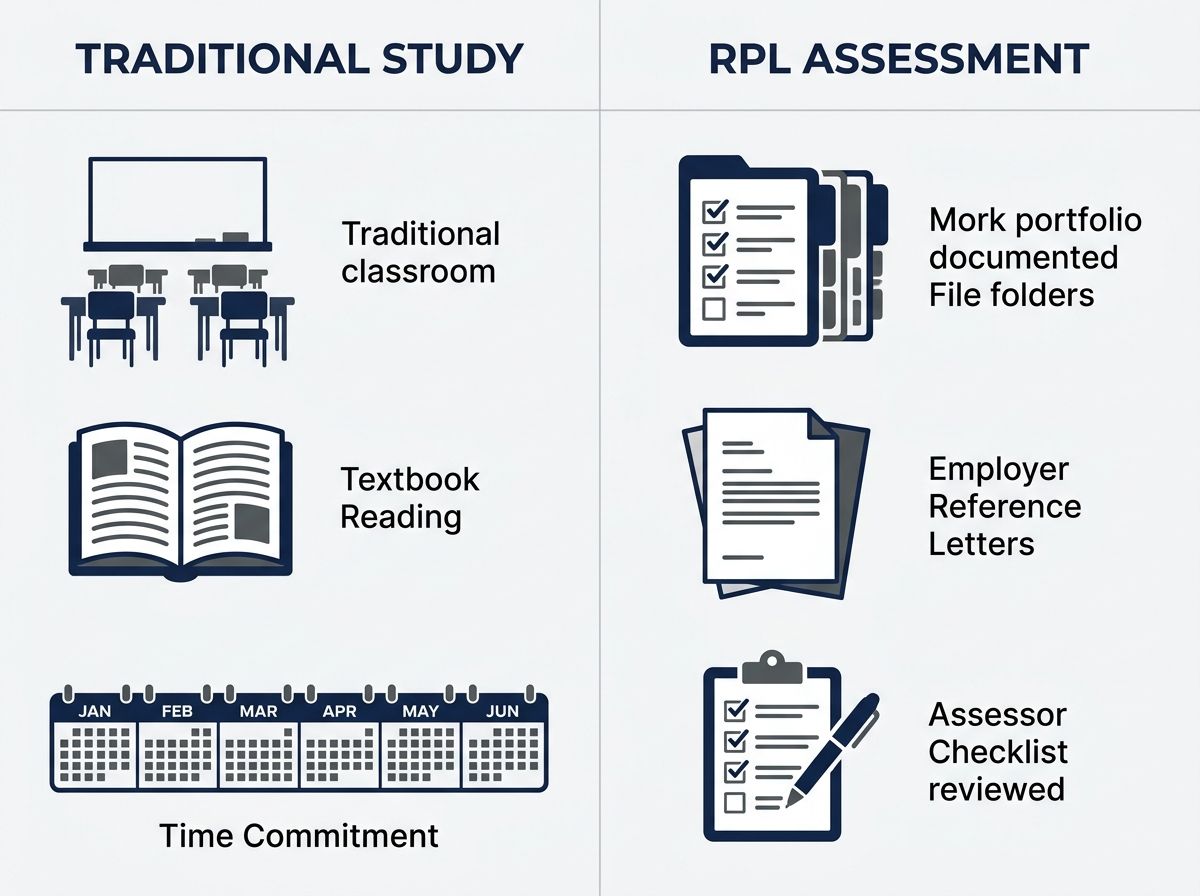
This is an assessment process, not a course or a classroom programme. The assessor evaluates what you already know and can do by looking at your work history, your documented projects, and your demonstrated competence. They then determine whether that competence meets the standards required for the qualification.
Experience can be evidence. That is the core principle. The RPL process is the formal pathway for presenting that evidence to a qualified assessor and having it officially recognised.
It is not a shortcut or a way to bypass legitimate assessment. The qualification is nationally recognised because the assessment is thorough and genuine. An assessor from a Registered Training Organisation conducts the evaluation, and if they identify any gaps, they provide gap training. This level of rigour is what makes the credential valuable.
Three trigger events that bring tradespeople to this point
There are three common pressure points that force this issue. If you are reading this article, you have likely encountered at least one of them.
- Being turned away from a site or project. You arrive for an induction or to start work, and you are asked to produce a licence number or proof of qualification. If you cannot, the work stops and the contractor moves on. This is the most immediate form of the issue, resulting in a direct operational shutdown with financial consequences that begin the same day.
- Receiving a formal notice or warning from a licensing authority. A regulator has become aware that you are performing licensed trade work without the required qualification or licence. This often comes from a routine audit, a complaint, or a site inspection. The notice makes your legal exposure clear. Operating without the required credential carries regulatory consequences, and the notice is the official signal that the system is looking.
- A contract or tender is rejected because you cannot prove your qualification. You have the capability to do the work, and the client wants to hire you. However, the contract requires proof of a nationally recognised qualification that you cannot provide. The work goes to a competitor who might have less experience but holds the right piece of paper.
Each of these situations represents the same underlying problem: competence without a formal credential. The trigger event is simply the moment this gap becomes impossible to ignore.
How the RPL process works for tradespeople
The RPL process follows a clear and structured pathway. Here is how it works in practice.
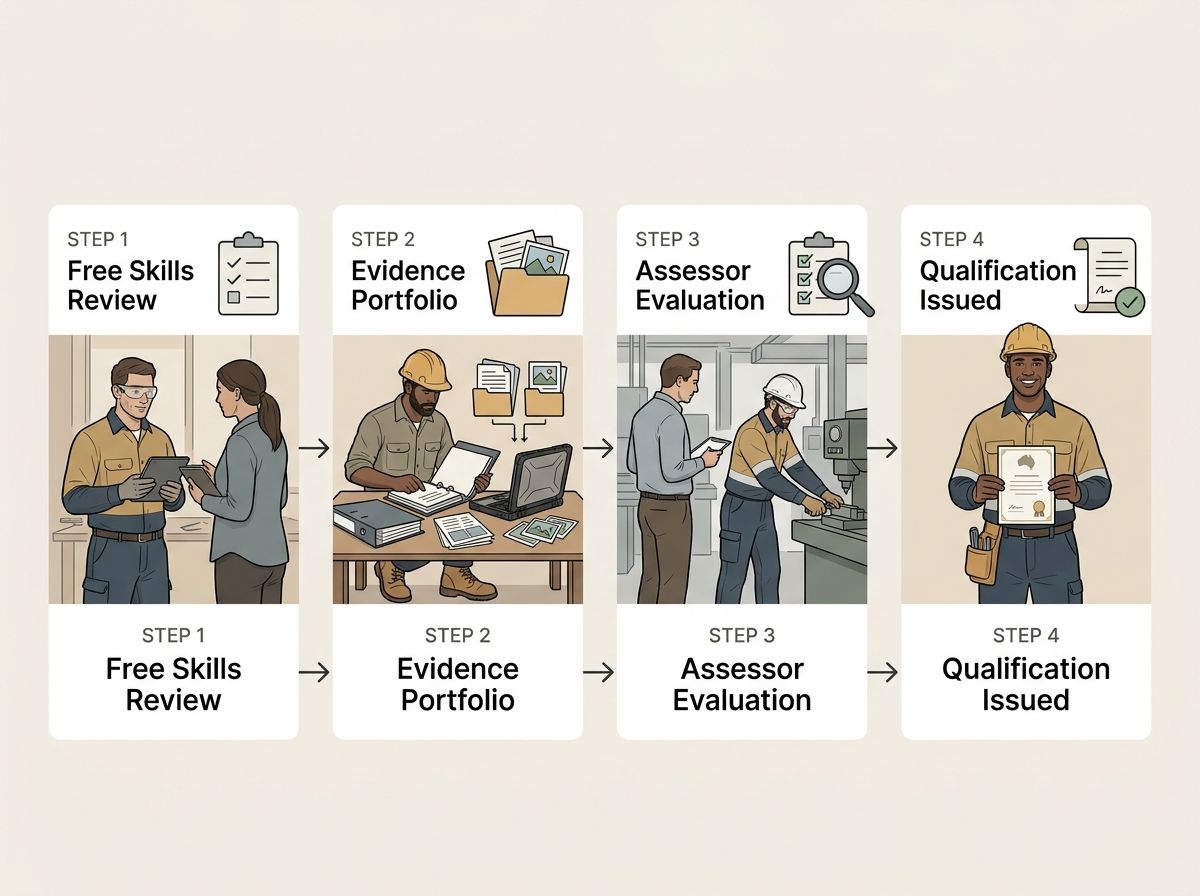
- Step 1: Free Skills Review. Before anything else, a skills review determines whether RPL is the right pathway for your specific situation and experience. This is the honest first step that establishes whether your background aligns with the qualification requirements before you commit to anything.
- Step 2: Evidence Gathering. You compile evidence of your existing competence. This is the core of the RPL process. Since the evidence already exists in your work history, the task is to organise and present it in a form the assessor can evaluate. Evidence types typically include employer references, records of completed work, photos of projects, logbooks or site diaries, and third-party reports from supervisors or clients.
- Step 3: Formal Assessment by an RTO Assessor. A qualified assessor from a Registered Training Organisation reviews your evidence against the requirements of the qualification. The assessor makes the determination of competency. RPL it guides you through this process, but the assessment is conducted by the RTO, and the qualification is issued by the RTO. If gaps are identified during assessment, gap training is provided to address them.
- Step 4: Qualification Issued. If the assessor determines that your competency has been demonstrated, the RTO issues the qualification. This is a nationally recognised qualification under the Australian Qualifications Framework, matching the exact credential obtained through traditional study.
The time investment in this process is in gathering and presenting evidence, rather than acquiring new skills. The process is evidence-based rather than time-based. Duration varies depending on the qualification and your individual circumstances; any timeframe you are given should be treated as indicative, not a guarantee.
What counts as evidence of your trade experience
Evidence of your trade experience can include a range of materials that document what you have done and how you have done it. The evidence already exists in your work history. The RPL process is about organising and presenting this proof, not creating it from scratch.
- Employer references and letters confirming your role, responsibilities, and the type of work you have performed
- Statutory declarations from supervisors, clients, or colleagues who can attest to your competence
- Photographs of completed work, showing projects you have delivered that demonstrate the skills required by the qualification
- Job records, invoices, or work orders that document the scope and nature of work you have undertaken
- Logbooks or site diaries that record your day-to-day activities and the tasks you have completed
- Training records, certificates of attendance, or records of any formal or informal training you have undertaken
- Third-party reports from supervisors, inspectors, or clients who have observed your work directly
The specific evidence requirements vary depending on the qualification being assessed. Your assessor will guide you through what is needed for your particular situation. The key point is that for most experienced tradespeople, the evidence already exists; it is a matter of gathering and presenting it, not creating it.
The honest truth: RPL is rigorous, not a rubber stamp
Some tradespeople approach RPL assuming it will be straightforward because they have years of experience, while others avoid it because they assume it will be too difficult or time-consuming. Both assumptions miss the point.
RPL is a genuine assessment of competency. A qualified assessor from a Registered Training Organisation evaluates your evidence against the requirements of the qualification. The assessor's judgement is independent. While RPL it guides you through the process, the assessment outcome is determined entirely by the RTO, not by us.
If gaps are identified where your evidence does not fully demonstrate the required competency, gap training is provided. This is not a failure; it is the process working as it should. The qualification is nationally recognised because the assessment is genuine, and gap training ensures that your recognition is complete.
The rigour is the point. A qualification obtained through a genuine assessment process carries the same standing as one obtained through traditional study. That standing is what makes it useful to you when dealing with a licensing authority, a principal contractor, or an insurer.
Why this is not the same as going back to trade school
The most common reason experienced tradespeople put off getting formally qualified is the assumption that it requires going back to a classroom. They expect months of attendance, sitting through content they already know, and stopping work to study tasks they have been performing for years.
RPL does not work that way. You are not required to attend classes, complete coursework, or re-learn what you already know. Instead, the assessment evaluates your existing competence. The time investment lies in gathering and presenting evidence of what you have already done, not in acquiring new skills.
The principle is recognition, not repetition. You have done the work, and the RPL process helps you demonstrate that competence to the formal system.
The RPL certificate and legal compliance: what you need to know
In Australia, many trades require a nationally recognised qualification as a prerequisite for obtaining a state-based trade licence. The RPL certificate, which is the qualification obtained through the RPL process, is the credential that satisfies this requirement.
Without the qualification, you cannot apply for the licence, and without the licence, you cannot legally perform licensed trade work. The RPL certificate is the bridge between your existing competence and your legal right to operate.
It is necessary to understand how the different parts of this process relate to each other. RPL it guides you through the RPL process, helping you gather evidence, prepare your portfolio, and navigate the assessment. The assessment is conducted by a qualified assessor from a Registered Training Organisation, and the qualification is issued by that RTO. The trade licence is then issued by the relevant state or territory licensing authority. These are separate steps. The role of RPL it is in the first part of that chain, guiding you to the qualification rather than issuing it or guaranteeing any licensing outcome.
Licensing requirements vary by trade and by state or territory. If you are unsure what qualification is required for your specific trade and location, the Free Skills Review is the practical first step to clarify what pathway applies to your situation.
You can explore the range of RPL qualifications available through RPL it across different trades and industries.
Your skills are real. The recognition is earned.
The RPL certificate does not create your skills; it formally recognises them. The years of work, the problems solved, and the jobs completed represent real competence that is yours. The RPL process is the formal mechanism for presenting that competence to a system that requires evidence in a specific form.
Your skills are real, your experience counts, and your recognition is earned.
The process is rigorous because the recognition is genuine. A qualification obtained through a real assessment process carries genuine standing with regulators, contractors, and clients.
Your skills speak. We help them be heard. The decision to begin is yours.
Ready to Get Recognised?
Start with a free skills review to find out if RPL is right for you.