Three ways Australian professionals can bypass university prerequisites
Most Australian professionals do not know an RPL certificate can substitute for university prerequisites. Here are 3 formally recognised pathways.

The assumption costing experienced professionals years
Many Australian professionals follow one rule without question: to enter a higher qualification, you must first complete the prerequisite. Certificate III before the Diploma. Diploma before the Graduate Certificate. Undergraduate degree before the MBA. It feels like a law of nature, but it is not.
Recognition of Prior Learning (RPL) is a formal assessment pathway within Australia's national qualifications framework. It allows experienced professionals to have their existing skills and knowledge assessed against the competency requirements of a qualification, rather than studying for it from scratch. The qualification issued at the end carries the same national recognition as one earned through traditional classroom study. It is the same credential, achieved through a different form of evidence.
The gap is not in the system; the gap is in awareness. Many professionals who could legitimately use one of three distinct RPL mechanisms to bypass a prerequisite do not know these pathways exist. This article outlines exactly how they work.
1. Using an RPL certificate as a direct prerequisite substitute
The first pathway is the most direct. Under Australia's national training system, registered training organisations (RTOs) are legally required to offer RPL assessment to any candidate who applies for a qualification. This is not a discretionary service. An RTO cannot refuse to consider an RPL application simply because it prefers candidates to study through its standard coursework program.
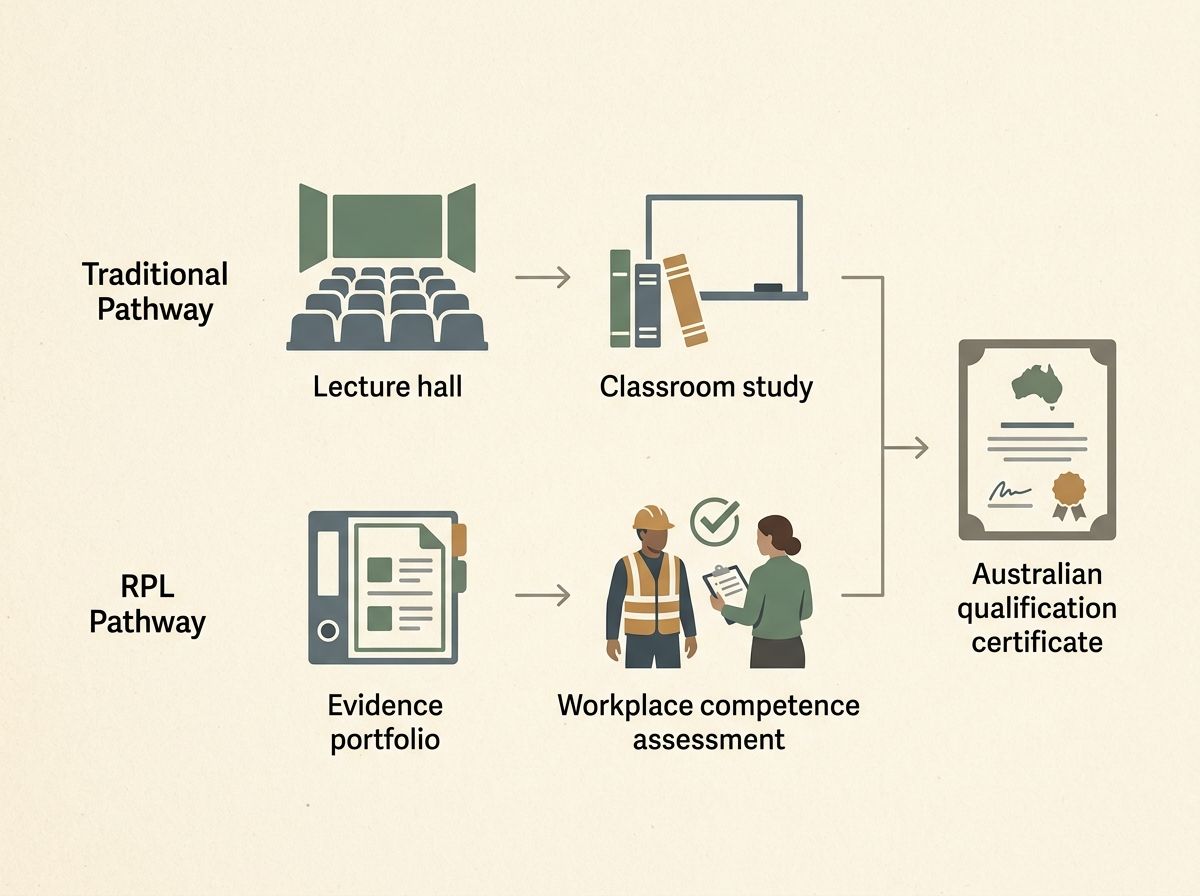
In practice, this means if a course you want to enter requires a Certificate III or Certificate IV as a prerequisite, you can apply to have your existing experience assessed against that qualification. If the assessor determines that your experience meets the required competencies, you receive the qualification. That credential then satisfies the entry requirement nationally, carrying the same status as if you had completed standard classroom study.
The assessment is rigorous. You must provide clear evidence, including employment records, supervisor references, work samples, records of professional development, and potentially a practical demonstration or interview. If gaps are identified during this process, gap training may be required before the qualification is issued. RPL is not a shortcut; it is a different method of assessment built to the exact same standards.
The practical outcome for an experienced professional is clear: the prerequisite qualification blocking your progress may be obtainable by proving what you already know, rather than spending months in a classroom repeating training on tasks you perform daily.
You can explore the range of RPL qualifications available through registered training organisations here.
2. RPL credit transfer for advanced standing in higher programs
The second pathway is less well known, but it is highly effective for professionals who already hold some formal qualifications or have completed prior study.
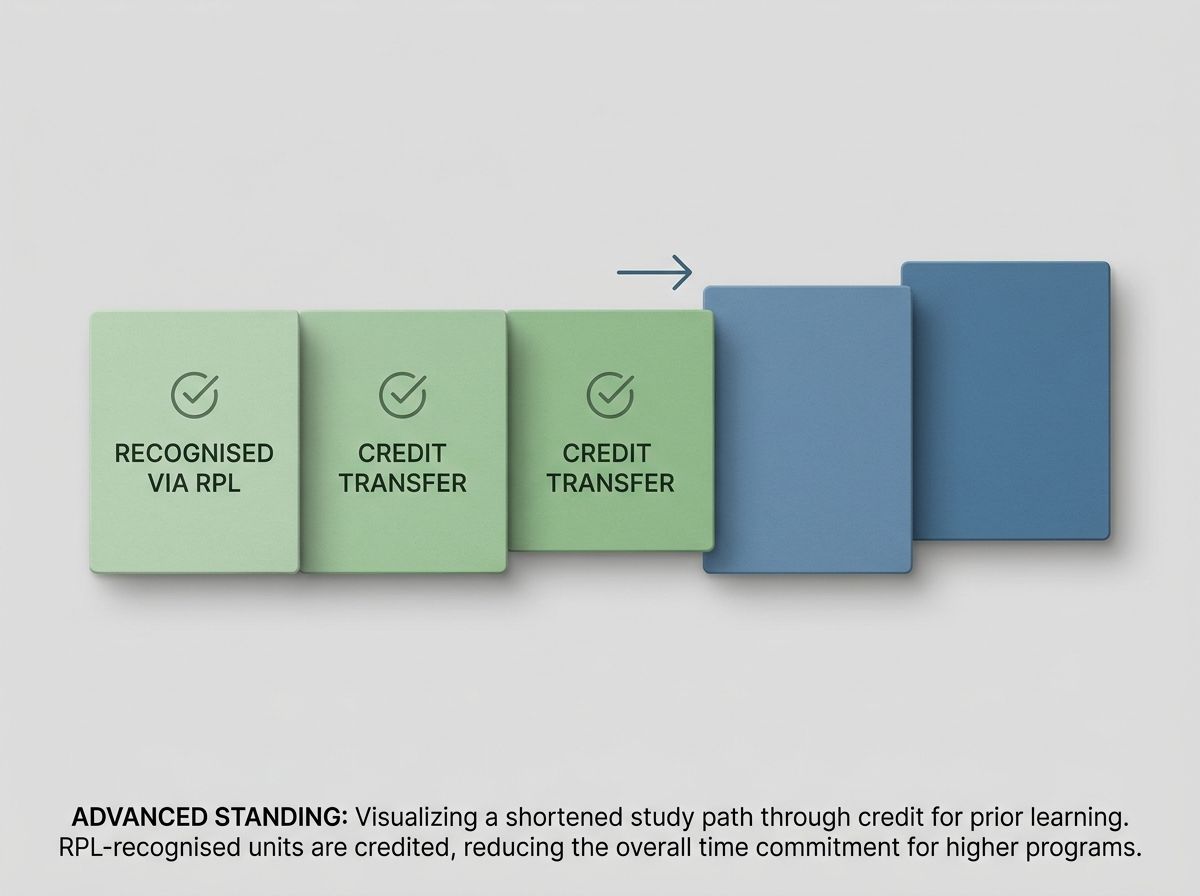
Advanced standing, or credit transfer, allows a candidate entering a higher program to have units they have already mastered, either through prior study or through RPL assessment, recognised and credited toward the new qualification. This means you do not start the program at unit one. You enter partway through, with the units that align with your experience already counted.
For a professional entering a Diploma of Business, a Diploma of Community Services, or a similar course, this can offer a significantly shorter pathway to graduation. The prerequisite is not bypassed in the traditional sense; it is absorbed. Your experience, once properly assessed and documented, satisfies units within the target program itself, rather than just the entry criteria.
This option is available across both the VET sector and, in some cases, higher education. The amount of credit granted depends on the institution and the program. Not every unit in every qualification is eligible for RPL credit, but for professionals with substantial, relevant experience, the reduction in study time is often significant.
The necessary caveat is that advanced standing requires the exact same rigorous evidence as any standard RPL assessment. The university or RTO will map your work history against specific unit competencies. Where gaps exist, those units must be completed through study. The pathway is shorter, but it still requires demonstration of skill.
3. RPL as a direct entry pathway into postgraduate programs
The third pathway is the one most professionals find surprising. It applies at the university level and challenges one of the most common assumptions in Australian higher education.
The assumption is that to enter a postgraduate program, such as a Graduate Certificate, Graduate Diploma, or MBA, you must have an undergraduate degree. For most applicants, that is true. However, Australian universities operate under a regulated framework that formally recognises RPL as an alternative entry pathway. A professional without a bachelor's degree, who has substantial and documented work experience, can apply for direct entry into a postgraduate program through this assessment process.
This is not a workaround. It is a formally recognised entry method within Australia's higher education regulatory framework. The assessment process is rigorous. The university must be satisfied that the applicant's experience demonstrates knowledge and capability equivalent to what an undergraduate degree would have provided. That is a high bar, and not every applicant will meet it, but the pathway is legitimate, official, and underused.
The practical result is that a professional with fifteen years of management experience, who has been told they cannot enter an MBA without an undergraduate degree, may have a formally recognised alternative. The rule requiring a prior degree has a regulated exception. Most institutions simply do not advertise it prominently.
Suitability for this pathway depends on the specific program, the institution's entry policies, and the depth of your experience. A preliminary assessment is the necessary first step, rather than an enrolment form.
The detail of how RPL can replace the undergraduate prerequisite for MBA entry is covered here.
What these three pathways have in common (and what they do not guarantee)
All three pathways share one non-negotiable requirement: demonstrated competency, proven through clear documentation and assessment. RPL is not a claim; it is a case. You build it with employment records, supervisor references, work samples, records of professional development, and sometimes a practical demonstration or a structured interview with a qualified assessor.
The assessor's judgement is independent. RPL it guides candidates through the evidence-gathering and documentation process, but the assessment itself is conducted by qualified assessors at registered training organisations or universities. Their determination is professional and final. Gap training may be required if skills gaps are identified during assessment. Some candidates will not be suitable for a given pathway. Honest suitability guidance before enrolment is not a limitation; it is the foundation of a process you can trust.
Experience is not inferior to formal education; it is simply a different form of evidence. Whether your work history is sufficient for a specific pathway is a question that requires professional assessment, rather than assumptions in either direction.
Understanding why experience alone is not enough without formal documentation is a useful companion to this article.
How to find out if your experience qualifies
The question this article cannot answer is whether your specific experience maps to the competency requirements of your chosen pathway. That requires an individual assessment: a direct, structured conversation about your career history, the evidence you can provide, and how it aligns with what an assessor needs to see.
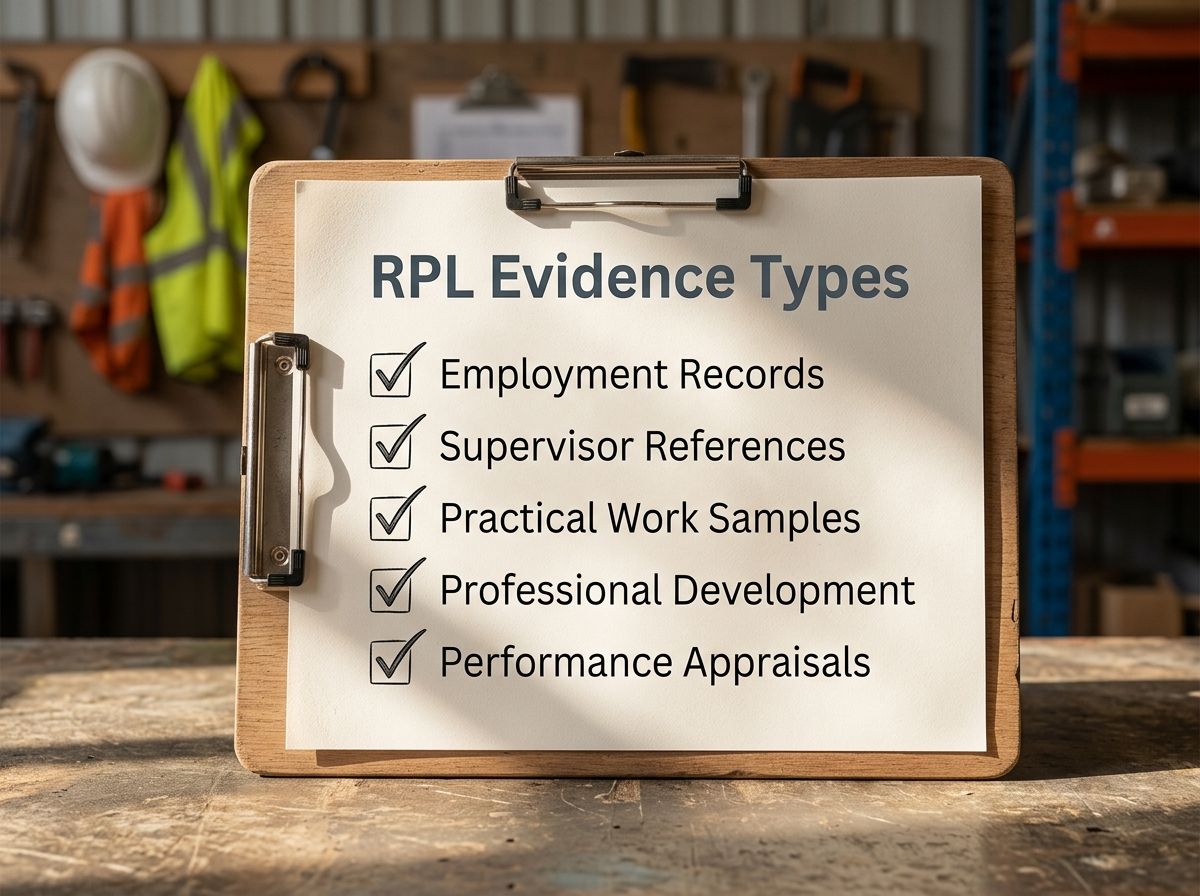
The types of evidence that typically support an RPL application include employment records and position descriptions, references from supervisors or colleagues who can verify your skills, samples of work you have produced, records of professional training you have undertaken, and performance assessments. The specific evidence required varies by qualification and by the units being assessed.
A Free Skills Review is the most practical, low-risk way to find out where you stand today. It is not an enrolment and requires no commitment. It is a straightforward assessment of whether your professional background aligns with what an RPL pathway requires, completed before you invest time or money in the process.
Your experience is valuable. Whether it qualifies you for one of these pathways is a question worth asking. The decision is entirely yours.
Ready to Get Recognised?
Start with a free skills review to find out if RPL is right for you.