Why an 'entry-level' RPL certificate is a powerful tool for senior professionals
An entry-level RPL certificate is not a step backward. Learn how senior professionals use RPL to translate their existing skills for new industries.

The challenge that stops senior professionals
You have spent a decade building a real career. You have managed teams, solved problems under pressure, and earned the authority that comes from years of doing the work. Now you want to move into a new industry, and you know your skills transfer. Then you see the job ad. It asks for a Certificate III or a Certificate IV, and your momentum stops. This is a frustrating moment for any experienced professional.
The reaction is immediate and completely understandable. This feels like a step backward. You are a senior professional. You have spent years managing people who hold these exact qualifications. Now, the hiring system seems to require you to obtain one yourself, as if your last ten years of practical experience did not happen.
That frustration is completely valid. However, it is based on a misunderstanding of what qualification levels actually represent. Once you understand the real distinction, the entire situation looks very different.
What 'entry-level' actually means on an RPL certificate
The key distinction is this: the level of a qualification, whether a Certificate III, Certificate IV, or Diploma, describes the complexity and scope of that specific framework. It does not define the career stage or seniority of the professional who holds it.
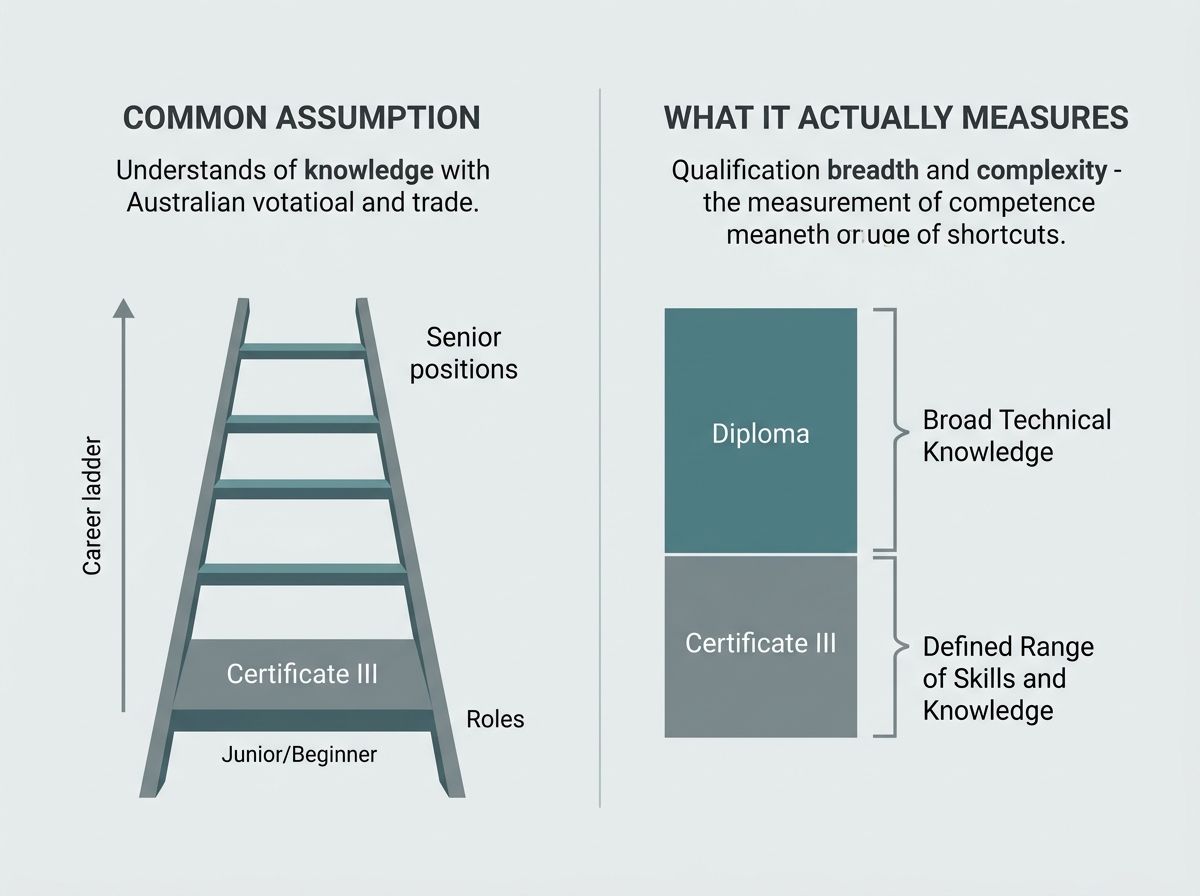
In the Australian qualifications system, certificate levels categorise what a qualification covers, including the breadth of knowledge assessed, the depth of skill demonstrated, and the complexity of the tasks involved. A Certificate III in Commercial Cookery describes the scope of culinary skills being formally assessed. It says nothing about whether the candidate has been cooking professionally for two years or twenty.
A senior hospitality manager who obtains a Certificate III in Events is not taking a junior role. They are securing the credential to prove their practical competence meets formal standards. The qualification level describes the credential, not your professional value.
An RPL certificate is a translation tool, not a training document
This perspective changes how you view the qualification.
An RPL certificate does not teach you how to do your job. Instead, it provides a way for a new industry to understand the competence you already possess.
Consider how Recognition of Prior Learning actually functions. It maps the skills and knowledge you have developed through years of work, decisions, and practical results, presenting them as evidence against a formal qualification standard. A qualified assessor from a registered training organisation reviews your evidence to check if your skills meet the standard. If they do, the registered training organisation issues the qualification.
This process does not involve learning new material. It is designed entirely to make your existing experience clear to an industry or system that cannot otherwise verify it.
For a senior professional pivoting to a new industry, this is the precise function the certificate serves. Your ten years of leadership and management experience exist. Your skills in project coordination, team leadership, client relations, and budget management are very real. The problem is not that you lack these skills in your new field, but that the industry has no formal way to verify them. The RPL certificate works as a translation tool, converting your competence into the language that employers, licensing bodies, and HR systems recognize.
The certificate does not change your knowledge. It changes how employers in a new sector evaluate your background.
Why senior professionals make strong RPL candidates
Senior professionals do not pursue RPL certificates despite their experience. They pursue them because their experience makes them ideal candidates.
RPL is an assessment of evidence. The assessor evaluates the documentation you provide against formal competency standards. More experience yields stronger evidence. A candidate with ten years of management experience has a broader, more substantial body of work to draw from than someone who is only two years into their career.
The evidence required to support an RPL application includes items like project records, process documentation, references from managers and peers who can confirm your skills, work samples, and details of training you have either run or completed. Experienced professionals usually have these resources in abundance. The primary challenge is not generating the evidence, but organising and presenting it in a clear, structured format.
This is where guided support helps. Because the RPL process involves a formal assessment by a qualified assessor, you may need gap training if specific competencies cannot be demonstrated through your existing evidence. However, for a senior professional with broad experience, the evidence-gathering stage is where their professional advantage is most visible.
Reframing your career pivot: You are not moving backward
It is worth addressing the professional dignity concern directly.
The concern about moving backward is understandable and valid. It comes from how we use the term 'entry-level', which usually implies a junior, inexperienced position. The problem is that this interpretation does not apply to qualification levels in the same way it applies to job titles.
A senior professional who obtains an RPL certificate is not entering a new industry at the bottom. They are entering it with their experience recognised and their competence formally documented. The certificate is the door. What you bring through that door—your seniority, judgment, and track record—remains with you.
The process focuses on recognition rather than repetition. You do not need to relearn skills you already use every day. You simply need to show that you have them.
A career pivot is a translation, not a demotion. You are not going back to the beginning of a new story. You are securing the credential that allows your new industry to read the story you have already written.
The RPL process for senior professionals changing careers
RPL is not a shortcut. It is a rigorous assessment of your current skills and competence, and it should be approached with that understanding.
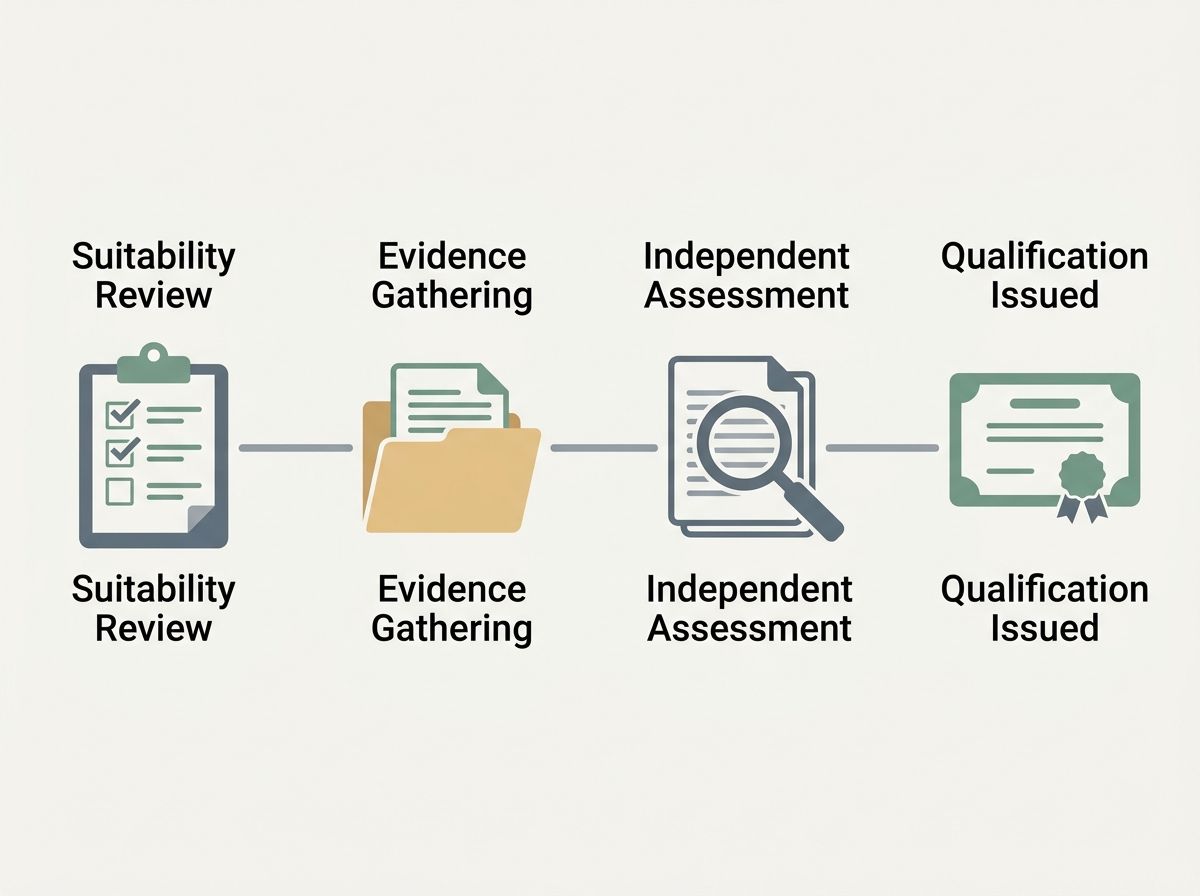
The process involves several clear stages. First, a suitability review determines whether your experience aligns with the competency standards of the qualification. This step ensures you do not spend time on a pathway that does not suit your situation. If RPL is not appropriate for you, a professional advisor will tell you directly rather than letting you proceed.
If the suitability review indicates a strong match, the next stage is evidence gathering. This is where you document your existing competence by compiling records, references, work samples, and other documents that prove your skills against the units of competency. For an experienced professional, this stage relies directly on the practical history you have built over your career.
A qualified assessor from a registered training organisation then evaluates this evidence. The assessor makes an independent determination of whether your materials prove competence against the required standards. If gaps are identified, you may need to provide additional evidence or complete specific top-up training. This is a normal part of the process rather than a failure.
Once you demonstrate competency across all units, the registered training organisation issues the qualification. Because the assessment is rigorous, the resulting qualification is nationally recognised.
For a senior career changer, the process is demanding in the evidence-gathering stage, but that demand is proportional to the depth of experience being certified. The more you have accomplished in your career, the more evidence you have to show.
Find out if your experience translates
An RPL certificate is not a training course or a step backward. It acts as a translation tool to make your existing competence clear to a new industry.
The next step is specific to your career: does your practical experience match the qualification you need? This depends on the specific course, your industry, and the details of your professional history.
A Free Skills Review is designed to answer this question. It provides a straightforward, no-obligation assessment of whether your experience supports an RPL pathway before you commit to the process. If the pathway does not suit your situation, we will tell you directly rather than guiding you into an unsuitable process.
You already have the experience. A Free Skills Review helps you determine if it translates.
Ready to Get Recognised?
Start with a free skills review to find out if RPL is right for you.