When Your Boss Says You Need a Cert 4 in Plumbing to Keep Your Crew
Your employer just said you need a Cert 4 in Plumbing to keep your crew. Here's what's driving the mandate — and how RPL lets you get qualified without leaving the job site.
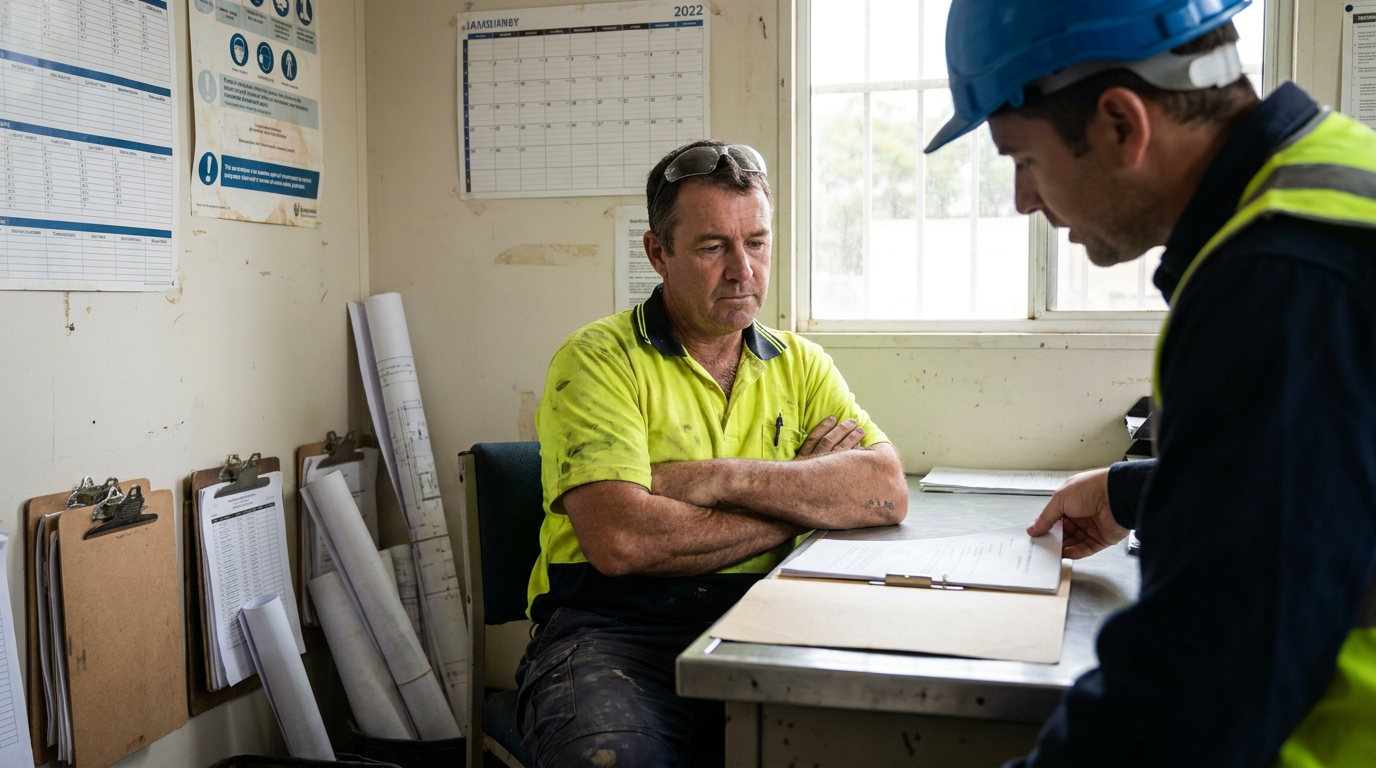
The site office meeting nobody wants
You're pulled off the tools. Someone needs a word. You sit down across from your site manager or an HR rep, and within two minutes you hear it: the company needs everyone in a supervisory role to hold a Cert 4 in Plumbing. The contract requires it. The deadline is real.
The first thing most experienced plumbers feel in that moment is not relief. It's something closer to disbelief. You've been running crews, managing complex jobs, and solving problems on site for years. You know the work. The work knows you. And now someone is telling you that a piece of paper you don't have is the thing standing between you and keeping your position.
That frustration is legitimate. It deserves to be named before anything else is explained. You have the experience. The question is what to do with the requirement that's just landed on your desk.
Why this is happening now: the regulatory shift behind the mandate
This is not arbitrary. The push for Cert IV qualifications in plumbing supervision is being driven by real changes in how the industry operates — changes that your employer is responding to, not inventing.
Across Australia, licensing requirements for plumbing contractors and supervisors vary by state, but the direction of travel is consistent. In a number of states, holding a plumbing contractor or supervisor licence requires a Certificate IV in Plumbing and Services (CPC40920) as part of the qualification pathway. Main contractors on large commercial and civil projects are increasingly requiring subcontractors to demonstrate that their supervisors hold the appropriate credentials before work can commence. Insurance and liability requirements are tightening in parallel.
Licensing requirements differ across Queensland, New South Wales, Victoria, Western Australia, South Australia, and other jurisdictions — if you need to confirm the specific requirements for your state, your state licensing authority is the right place to check. What is consistent is that the industry is moving toward formal qualification requirements for anyone in a supervisory or contractor role, and employers are responding to that pressure.
If you've been stopped from working on a technicality before, you'll recognise this pattern.
What the Cert 4 in Plumbing actually covers — and why you already know most of it
The Certificate IV in Plumbing and Services (CPC40920) is a nationally recognised qualification that covers advanced plumbing systems, supervisory and compliance responsibilities, risk management, and the technical knowledge required to operate as a contractor or senior tradesperson. It comprises core units and elective units, with the core units addressing areas such as legal and risk management in plumbing, design and documentation, and advanced technical systems.
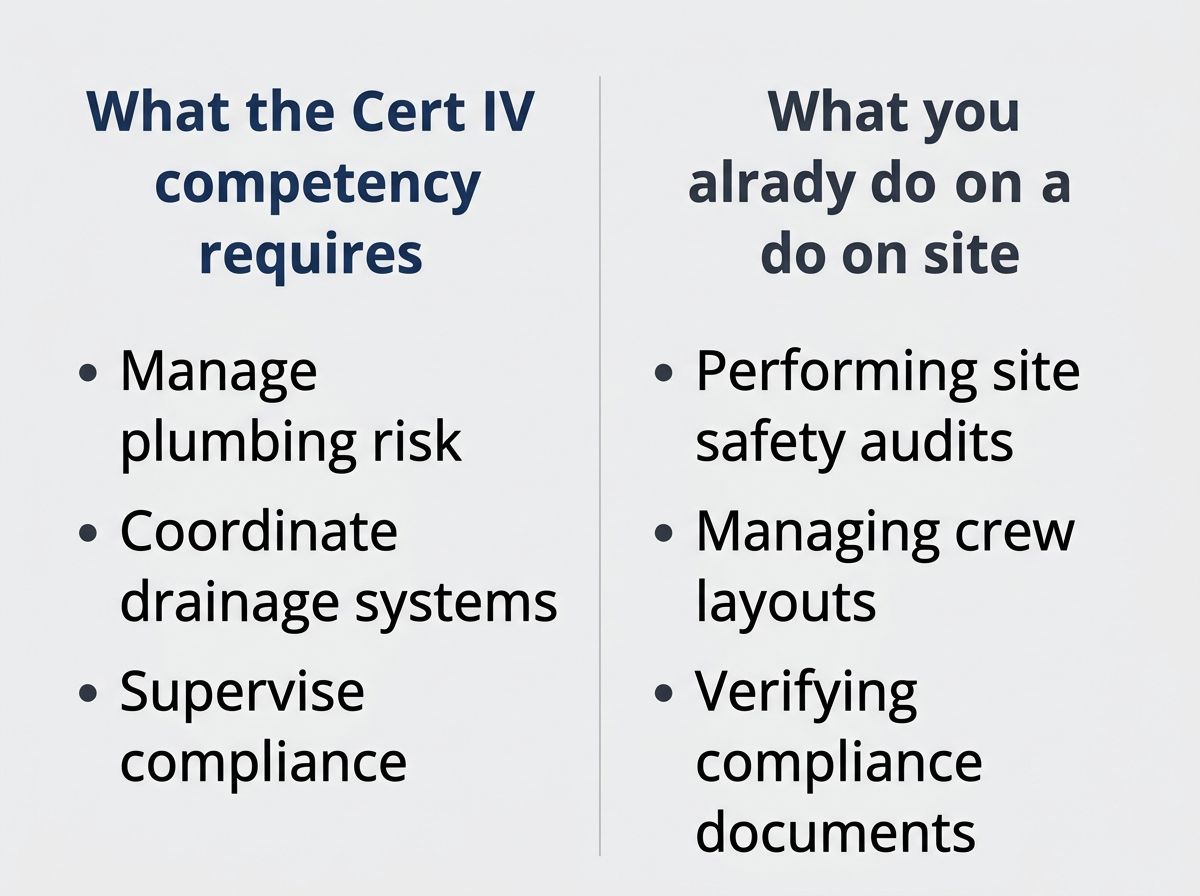
For a plumber who has been running a crew, managing subcontractors, reading plans, handling compliance documentation, and troubleshooting complex drainage, gas, or hydraulic systems — most of what the qualification covers is not new territory. It is existing practice that needs to be formally assessed and documented.
That distinction matters. The Cert IV is not a training program designed to teach you plumbing. It is a qualification framework that describes the competencies required at the supervisory and contractor level. If you are already operating at that level, the question is not whether you can do the work — it is whether your existing skills can be formally recognised.
Recognition, not repetition. That is the principle behind the RPL pathway.
RPL: the pathway that doesn't require you to leave the job site
Recognition of Prior Learning — RPL — is a formal assessment pathway within the Australian vocational education and training system. It exists specifically to allow people with substantial work experience to have that experience formally assessed against a qualification's competency standards, rather than completing the full training program from scratch.
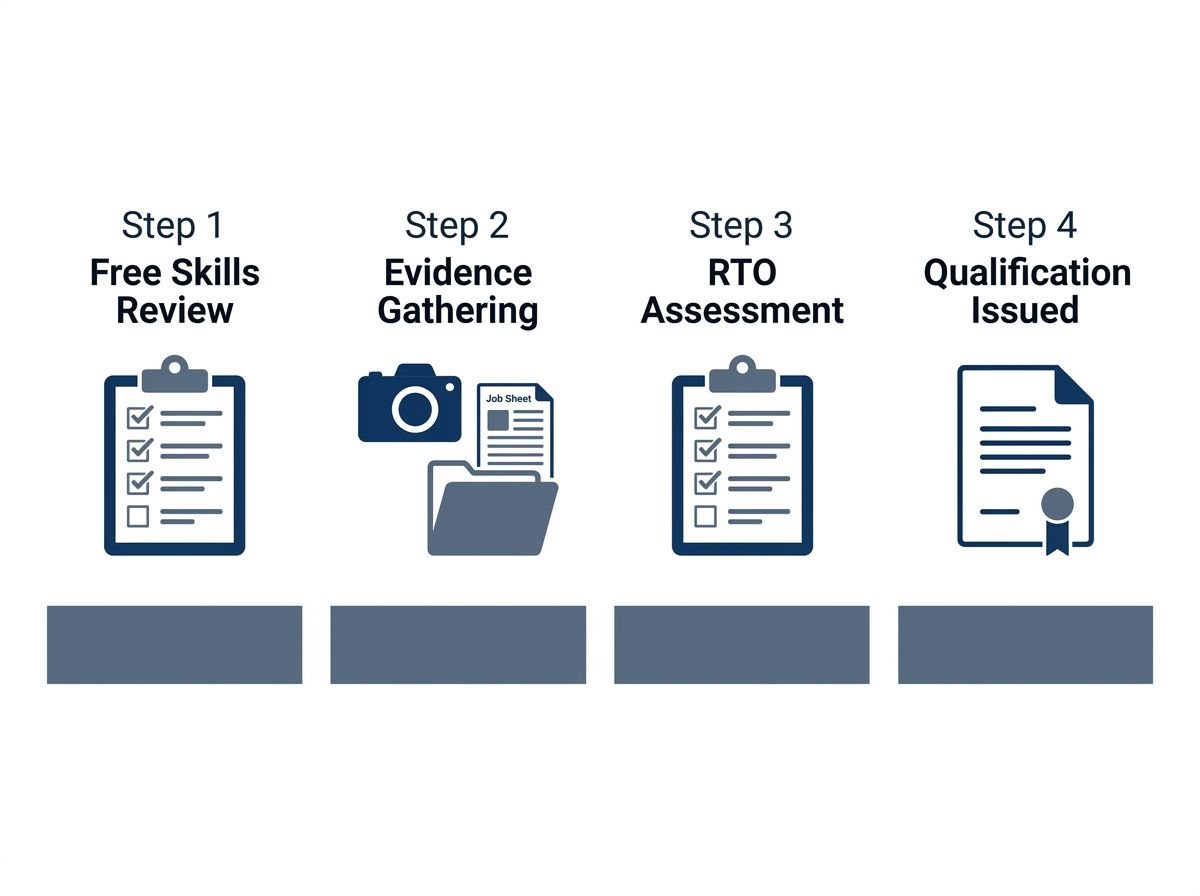
For an experienced plumbing supervisor, RPL means working with a registered training organisation (RTO) to gather and present evidence of your existing skills and knowledge. The RTO's assessor then evaluates that evidence against the requirements of CPC40920. If the evidence demonstrates competency across the required units, the qualification is issued. If gaps are identified, gap training is provided — this is standard practice and is typically included as part of the RPL process.
The types of evidence an assessor will typically consider include: site photographs of completed work, job sheets and compliance records, employer reference letters or statutory declarations, logbooks and work history documentation, and records of previous inspections or certifications. These are indicative evidence types — your RTO will confirm exactly what is required for your specific situation.
RPL is a rigorous assessment pathway. It does not skip the assessment — it changes the form of evidence. Your years on the tools are not a shortcut. They are the substance of the assessment. Experience can be evidence. The RPL process is how that evidence is formally presented and evaluated.
The timeframe for completing an RPL assessment varies depending on the evidence you can provide and the RTO's assessment schedule. A Free Skills Review will give you a clearer picture of what to expect in your specific situation.
If the idea of going back to trade school is what's been holding you back, this is worth reading:
What happens if you don't get the Cert 4 in Plumbing
If your employer has issued a formal requirement, the consequences of not meeting it are real. Depending on your employment contract and your employer's specific requirements, failing to obtain the qualification by the deadline could mean losing your supervisory role, being unable to legally run a crew on that site, or having your contract not renewed.
Whether an employer can require a Cert IV as a condition of a supervisory role depends on your employment contract and the applicable state licensing requirements. If your employer has issued a formal requirement and you are uncertain about your rights or obligations, your union or a workplace relations adviser is the right place to seek guidance. This article does not provide legal advice.
What is clear is this: if the deadline is real, the timeline is not yours to control. The question is whether you have a pathway — and whether you are moving along it.
What to do before your employer's deadline
If you've been given a deadline, the most useful thing you can do right now is start gathering the evidence that will support an RPL assessment. You don't need to wait for a formal enrolment to begin this process.
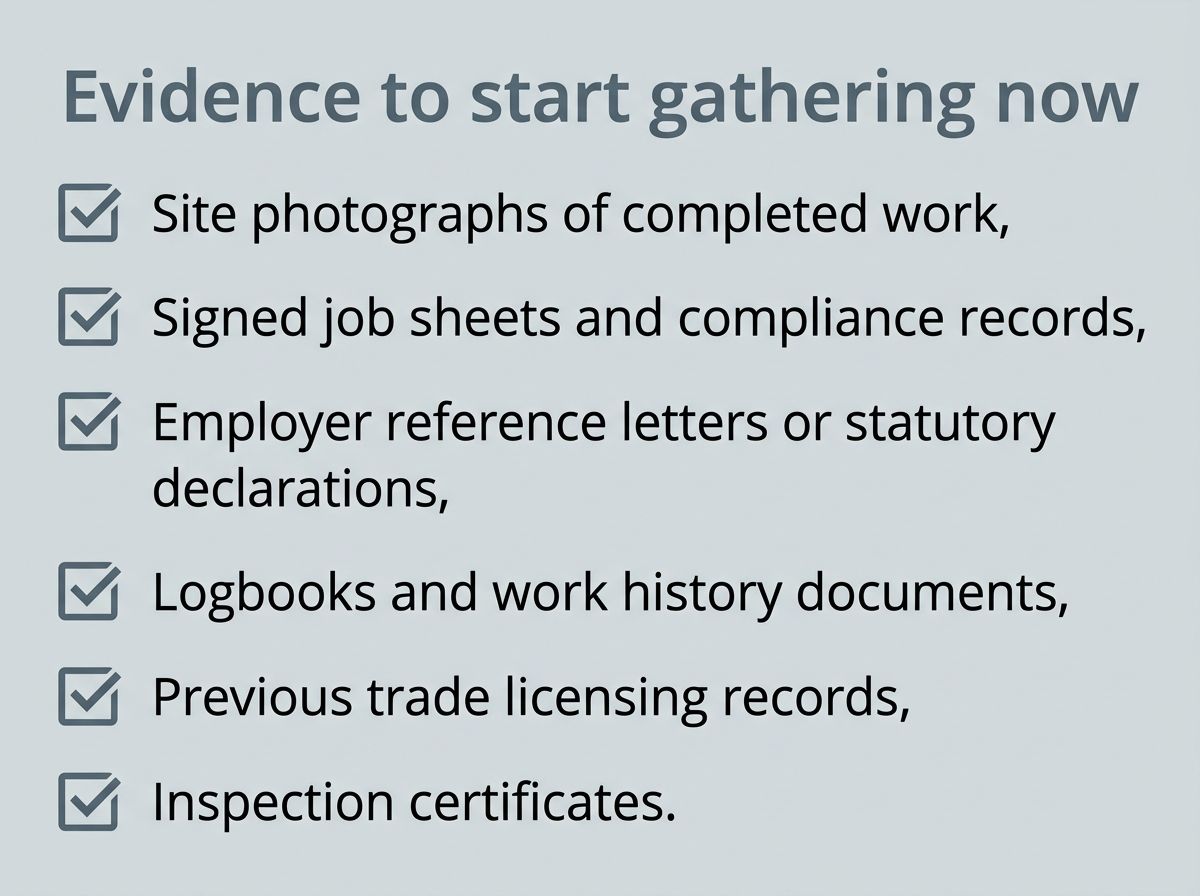
- Pull together your work history. Job sheets, compliance certificates, inspection records, and any documentation that shows the scope and complexity of the plumbing work you have supervised or completed.
- Gather site photographs. Photos of completed drainage systems, gas installations, hydraulic work, or other plumbing systems you have worked on are strong direct evidence of competency.
- Contact your employer or previous employers for a reference letter or statutory declaration. A letter from a supervisor or employer that describes your role, responsibilities, and the types of work you have managed is one of the most useful evidence types in an RPL assessment.
- Locate your logbooks or training records. Any records from your apprenticeship, previous training, or continuing professional development may be relevant.
- Start a Free Skills Review. This is the most efficient first step — an honest assessment of whether your experience is likely to support an RPL pathway, before you commit to anything.
The Certificate IV in Plumbing and Services (CPC40920) is the qualification your employer is asking for. The product page below is the right place to understand what the RPL pathway for this qualification involves.
Learn more about the RPL pathway for this qualification:
Your experience is the starting point — not the problem
The employer mandate can feel like a challenge to your competence. It isn't. The Cert 4 in Plumbing exists to formally recognise the skills that experienced supervisors already have. RPL is the mechanism that makes that recognition possible without requiring you to re-learn what you already know.
Your skills are real. Your experience counts. Recognition shouldn't require starting over.
The first step is free. The decision is yours.
Ready to Get Recognised?
Start with a free skills review to find out if RPL is right for you.