You can plumb, wire, and gas it perfectly, but the inspector still tags it out
An inspector tagged your work over a missing credential? Learn how RPL recognises your experience for the Certificate II in Split Air Conditioning.
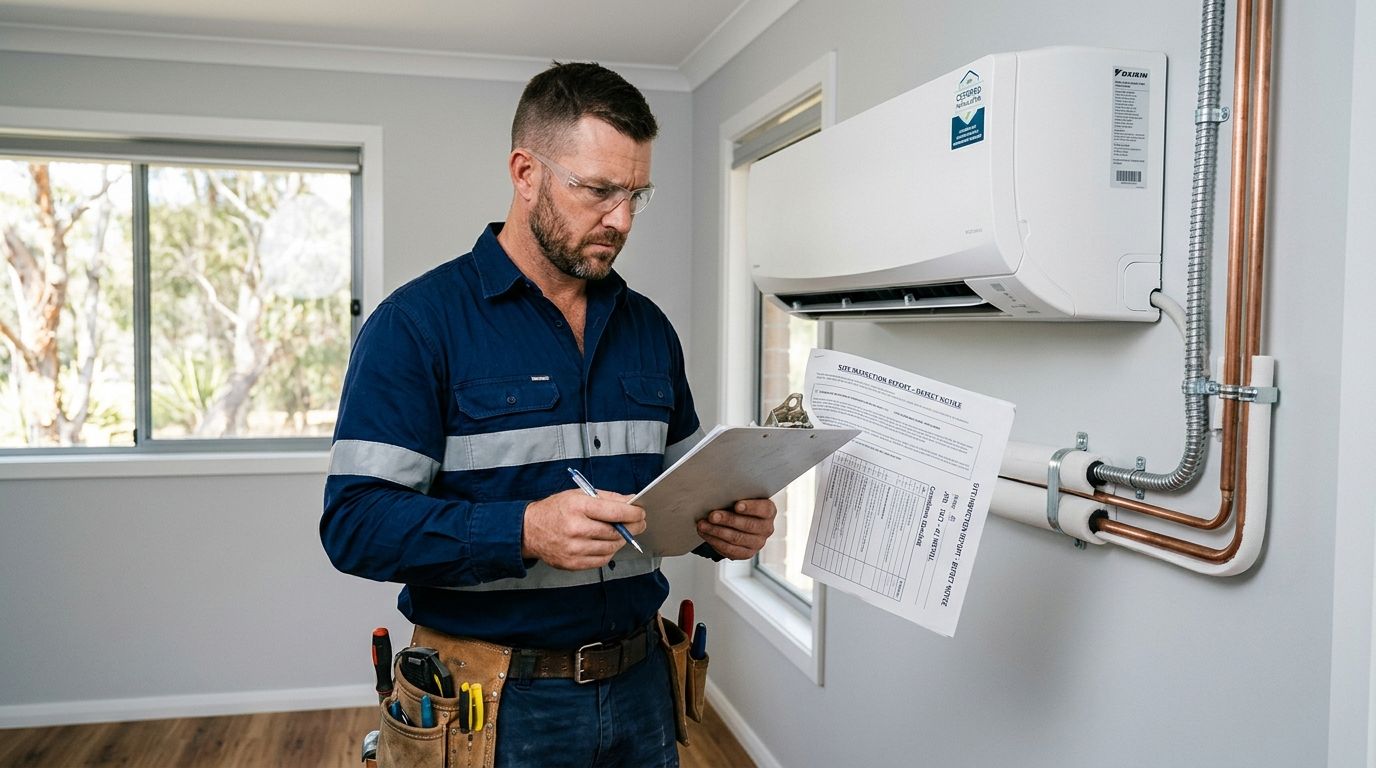
The job was perfect, but the inspector didn't care.
You have done this work many times. Perhaps hundreds of times. The split system goes in clean, the wiring is correct, and the pressures are right. The unit fires up on the first attempt. You know what you are doing, and the running system proves it.
Then the inspector arrives, the site supervisor checks the paperwork, or the building certifier runs through the compliance checklist. That is when the job gets tagged.
This does not happen because the installation was wrong, or because there is a fault in the system. It happens because you do not hold the UEE20120, which is the Certificate II in Split Air Conditioning and Heat Pump Systems.
Your work was flawless, but your credential was missing. Under current compliance rules, those two facts carry equal weight. That is the part that stings the most.
If you are a plumber, an electrician, or a gas fitter who installs heat pump systems as part of your broader trade work, this situation is becoming common. It has nothing to do with your actual competence.
Why multi-trade workers get caught in this licensing gap
Installing heat pumps and split systems has long been part of the day-to-day job for multi-trade workers. Plumbers handle the water connections and drainage, electricians wire the indoor and outdoor units, and gas fitters connect the refrigerant lines and commission the system. In practice, experienced tradespeople often do all of these tasks, or at least enough of them to get the job done correctly.
However, the UEE20120 is a standalone qualification. It covers split air conditioning and heat pump systems as a specific, separate scope of work. This is distinct from a general electrical licence, plumbing licence, or gas fitting certificate. Many experienced workers who have installed these systems for years never needed this formal qualification in the past, because their work was covered under their primary trade licence when the compliance environment was less strict.
That environment has changed. Licensing and compliance rules across Australia have tightened. The UEE20120 is increasingly treated as a strict requirement for split system and heat pump installations, rather than something covered by a general trade licence. Enforcement varies by state and by the type of project, so you should confirm the exact requirements in your jurisdiction with your local state authority. But the trend is clear: regulators ask for this credential more often, and workers without it are being stopped from completing jobs.
This is not a failure of skill. It is a structural gap created by regulatory changes, and there is a clear pathway to resolve it.
If you are feeling pressure from employers or site supervisors, you should understand why the cert 2 air conditioning requirement is tightening across Australia.
The underlying issue with a defect notice
A defect notice does not actually state that your work was faulty.
It states that your credential was missing. That is a different problem entirely. For a tradesperson who has installed split systems and heat pump units for years without a callback, a fault, or a safety incident, this distinction is highly important.
You have the skills and you have the track record, but you do not have the piece of paper.
The compliance system does not question whether you can do the job. It asks whether your competence has been formally assessed and documented against national standards. Those are separate things. The system treats the documentation as the only proof it can accept, because it cannot see your daily experience. It only recognises what has been formally certified.
This is not to defend the system, but to explain how it works. Once you understand what the regulators are actually looking for, the path forward becomes much clearer.
The defect notice is not the end of the road. It is simply the moment the system asks for formal documentation of what you already know how to do.
What the regulator actually looks for
The UEE20120, or Certificate II in Split Air Conditioning and Heat Pump Systems, is a nationally recognised qualification under the Australian Qualifications Framework. It covers the exact competencies needed for split system and heat pump installation work, including safe work practices, system commissioning, fault diagnosis, and the associated compliance documentation.
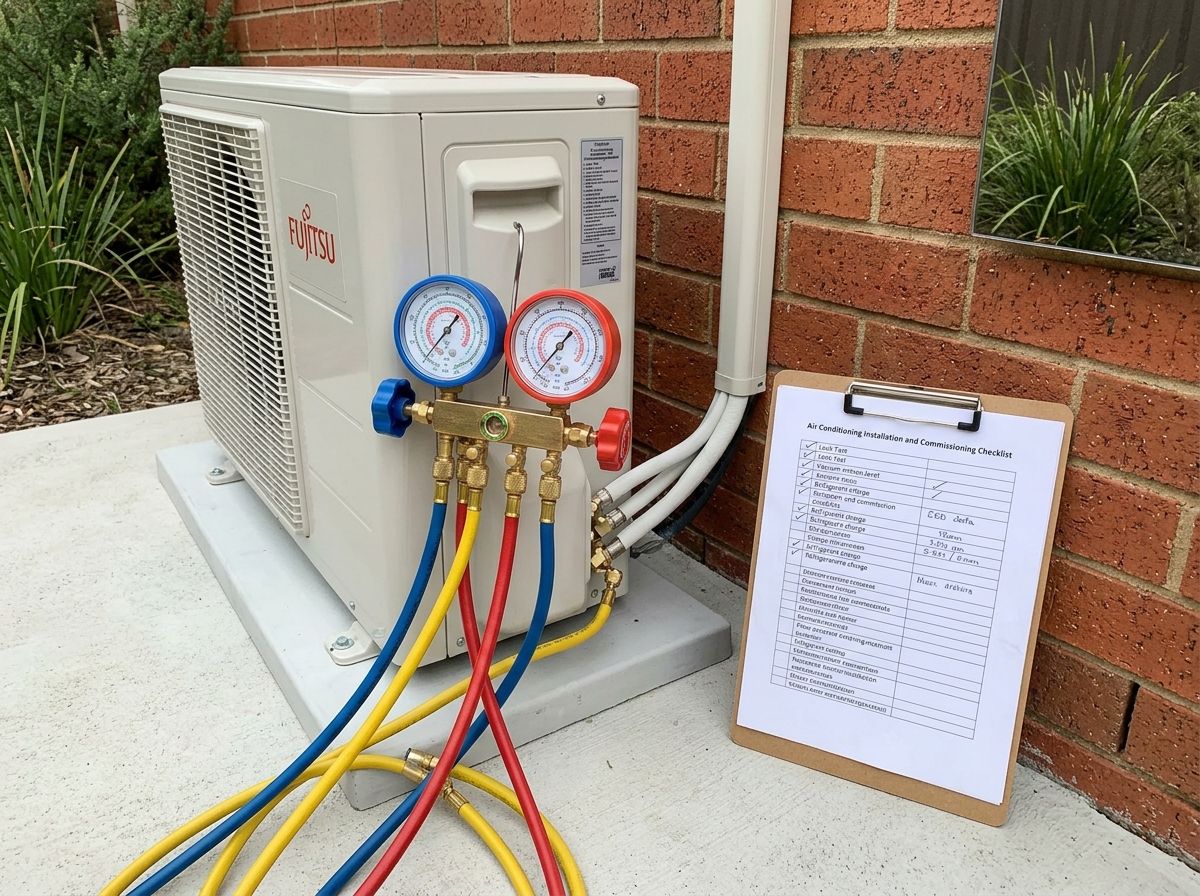
If you have been doing this work, you are already meeting these standards on the job. The regulator is not asking whether you can do the work. They are asking whether your competence has been assessed against the national standard by a qualified assessor from a registered training organisation, and whether there is a formal record to prove it.
That is the gap. It is not a lack of skill, but a lack of formal evidence.
Recognition of Prior Learning (RPL) is the formal pathway that closes this gap. Through this process, your existing experience is assessed against the qualification standard, so you do not have to sit through training you do not need.
RPL: a pathway based on what you already know
Recognition of Prior Learning is the formal process to have your existing skills and experience assessed against the national standard. For experienced multi-trade workers who install heat pump systems, RPL means your work history, employer statements, job records, and demonstrated competence are evaluated by a qualified assessor from a registered training organisation.
You are not learning how to install a split system from scratch. You are proving that you can already do it, using a format that a qualified assessor can evaluate against the UEE20120 standard.
The assessment is conducted by a qualified assessor from the delivering RTO. RPL it assists candidates throughout the process, helping you organise your evidence, understand what the assessor requires, and navigate the necessary steps. The qualification is issued directly by the RTO. It is nationally recognised because the assessment is thorough and genuine.
If gaps are identified during the assessment, gap training is provided. For most experienced workers who have installed split systems and heat pump units as part of their trade, the main gap is usually in the physical evidence rather than your technical skill. You have done the work; you simply need to assemble the documentation to prove it.
That is exactly what the RPL process is designed to achieve.
If you want to know how the cert 2 air conditioning RPL process works for experienced tradies who have been doing this work for years, this article is worth reading.
The evidence you already have without realising it
Most experienced multi-trade workers who install heat pump systems already have the evidence they need. It is often sitting in job files, on phones, in employer records, and with supervisors or clients who have watched you work. The RPL process is about gathering this material and presenting it in a format that a qualified assessor can evaluate.
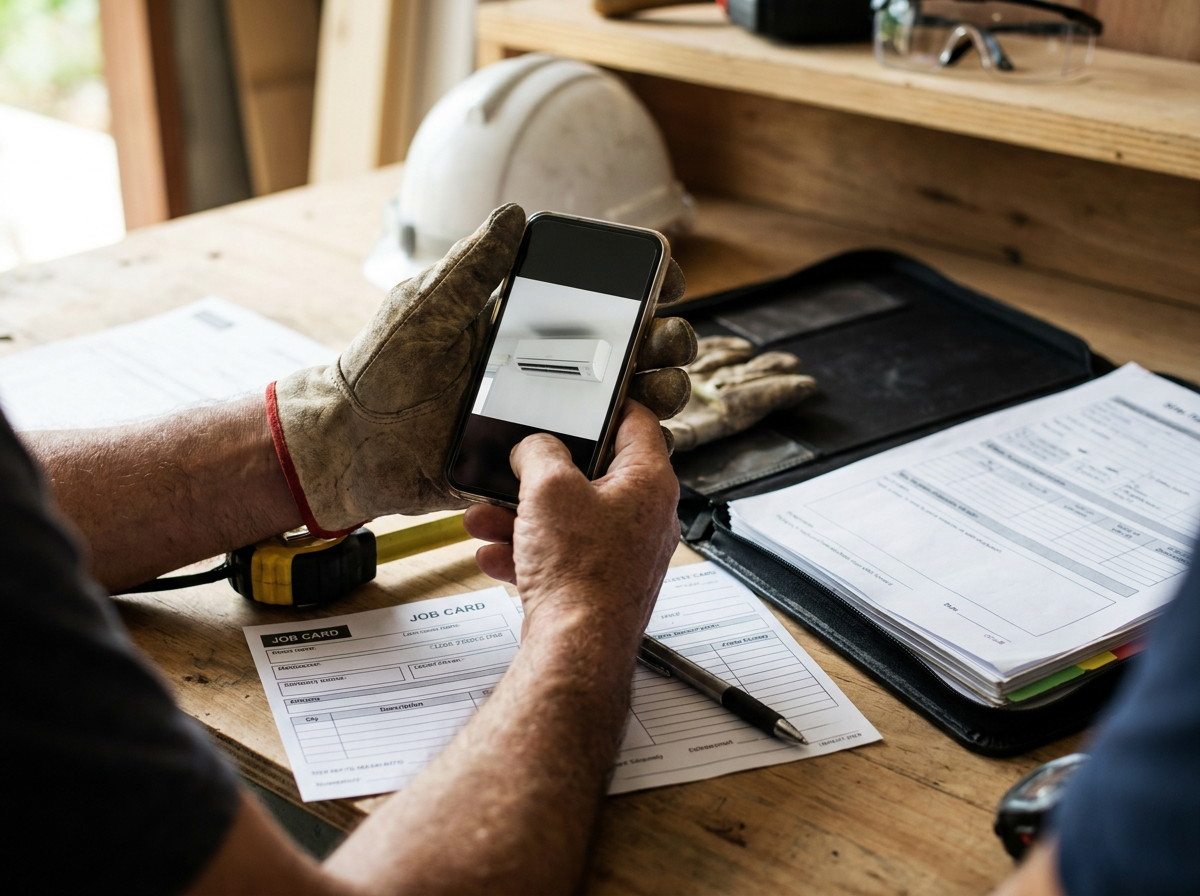
The types of evidence that typically support an RPL assessment for split system and heat pump installation work include:
- Records of completed installations, such as job sheets, work orders, or site documentation showing the systems you have installed
- Employer or supervisor statements confirming your experience and the scope of work you have performed
- Photographs of completed installations, including indoor and outdoor units, wiring connections, and commissioning setups
- Commissioning documentation, including records showing system pressures, temperatures, or performance checks you have completed
- References from clients or contractors who can verify the quality and scope of your work
- Any relevant licences, tickets, or certificates you already hold, including your primary trade licence
You do not need all of these items. You simply need enough to demonstrate competence against the qualification standard. A Free Skills Review will clarify what you have, what might be missing, and whether your experience is suitable for an RPL assessment, with no obligation to go further.
Recognition should not require starting over
A defect notice is not a judgment on your competence. It is simply a request for the formal documentation that the compliance system requires.
The UEE20120 is not a course you must sit through. It is a standard your work needs to be assessed against. For experienced multi-trade workers who have installed split systems and heat pump units as part of their trade, this assessment is the logical pathway. You do not need to go back to the classroom, start an apprenticeship, or begin from scratch.
Your skills are real, your experience counts, and your recognition is earned. The process starts by understanding the value of what you already know.
The Certificate II in Split Air Conditioning and Heat Pump Systems (UEE20120) product page provides more detail on the qualification and the RPL pathway available through RPL it.
The decision is yours. The first step is evaluating what you have already achieved.
Ready to Get Recognised?
Start with a free skills review to find out if RPL is right for you.