When the Boss Says 'No Cert, No Split Systems': What the Cert 2 Air Conditioning Mandate Actually Means for Experienced Technicians
Your employer just said no cert, no split system work. Here is what the Cert 2 Air Conditioning (UEE20120) actually requires and how RPL can help.
The Moment the Mandate Lands
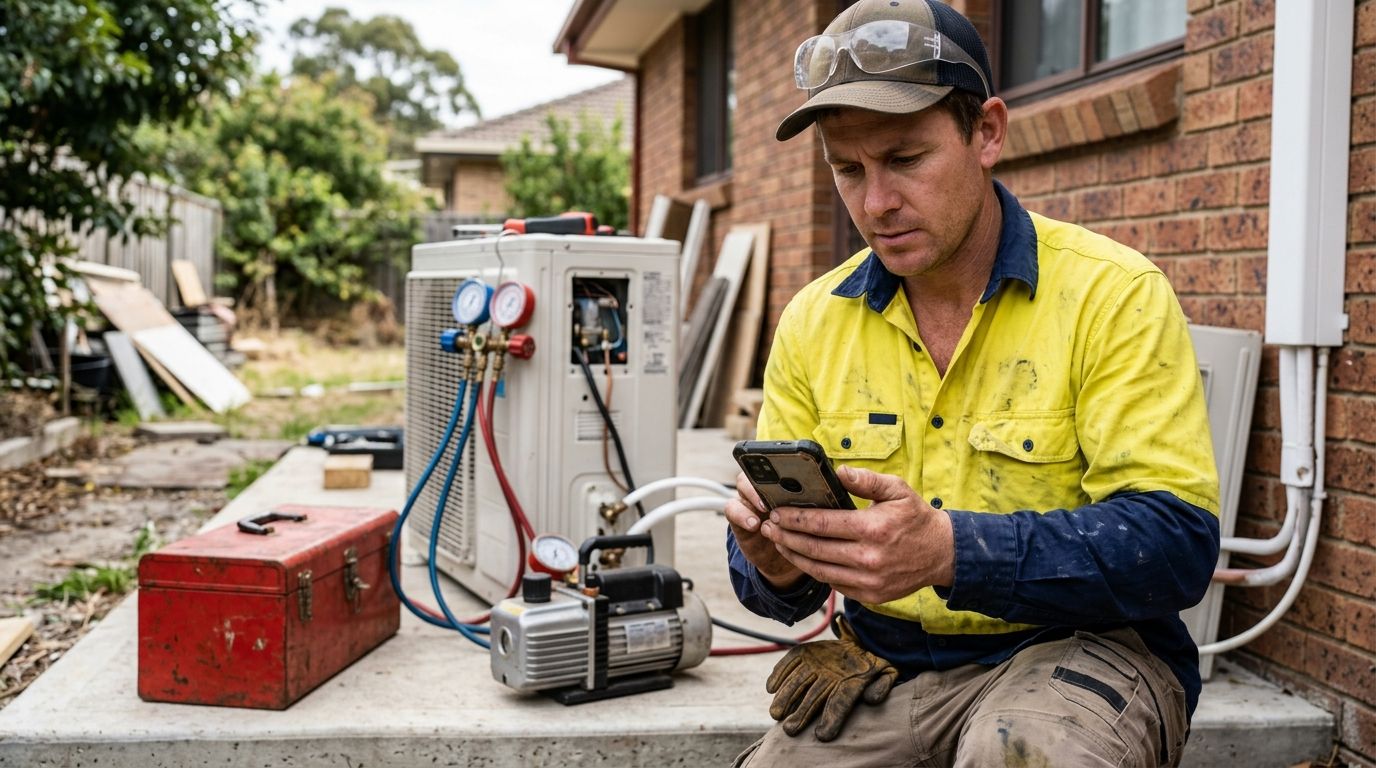
You have been installing and servicing split systems for years. You know the work. You have mounted outdoor units in awkward spots, run refrigerant line sets through walls, commissioned systems in the middle of summer, and diagnosed faults that had other technicians stumped. Then the email arrives. Or the site meeting happens. Or HR sends a notification. The message is the same: from now on, anyone doing split system work needs the Cert 2 Air Conditioning—the Certificate II in Split Air Conditioning and Heat Pump Systems (UEE20120). No cert, no split systems.
The frustration is real. You are not being asked to prove you can do the job—you have been doing it. You are being asked to produce a document that says you can. That distinction matters, and it is worth naming before anything else: this mandate is not a judgement on your competence. It is a compliance requirement. For experienced technicians, there is a pathway through it that does not involve going back to school.
Why This Is Happening: The Compliance Landscape for Split System Technicians
The push for formal qualifications in split system work is driven by a combination of licensing requirements, refrigerant handling regulations, and contractor compliance obligations. At the national level, anyone handling refrigerants in Australia must hold a refrigerant handling licence issued by the Australian Refrigeration Council (ARC). The UEE20120 qualification is the recognised training pathway for the restricted ARCtick licence—specifically the RSS03 licence—which covers installation and decommissioning of single-head split systems up to 18kW cooling capacity.
State licensing requirements add another layer. According to information published by training providers, Queensland requires a refrigerant handling licence for any split system installation regardless of work value, and a QBCC mechanical services licence for work exceeding certain thresholds. Victoria classifies refrigerated air conditioning under plumbing regulations, which means additional registration with the Victorian Building Authority (VBA) may be required on top of the ARC licence. NSW has its own occupational licensing requirements for RAC work. Requirements vary by state, and the specific obligations in your jurisdiction should be confirmed with the relevant licensing authority.
What this means in practice: employers and principal contractors are increasingly requiring workers to hold the UEE20120—or the higher Certificate III in Air Conditioning and Refrigeration (UEE32225)—because it underpins the licensing and refrigerant handling credentials that site compliance requires. The mandate your employer has issued is a response to this landscape, not an arbitrary policy.
What the Cert 2 Air Conditioning (UEE20120) Actually Is
The Certificate II in Split Air Conditioning and Heat Pump Systems (UEE20120) is a nationally recognised qualification within the UEE Electrotechnology Training Package. It covers the competencies required to install, commission, and decommission single-head split air conditioning and heat pump systems following a prescribed routine.
The core units of competency include work health and safety practices, fabrication and fixing of equipment, reading and interpreting technical drawings, installing split systems, handling refrigerants, and following environmental procedures. The qualification does not cover servicing, repair, or fault diagnosis—those competencies sit within the higher Certificate III qualification. For technicians whose work extends beyond installation into maintenance and fault-finding, the Cert III (UEE32225) may be the more appropriate pathway.
It is also worth noting that licensing requirements may differ between jurisdictions, and the UEE20120 alone may not satisfy all state-specific obligations. The Companion Volume Implementation Guide for the UEE Electrotechnology Training Package notes that licensing and regulatory requirements for tasks covered by units of competency may differ between jurisdictions.
You Have Been Doing This Work for Years—Here Is What That Means for Your Cert 2
Here is the reframe that matters. The UEE20120 assesses competencies in installing, commissioning, and decommissioning split systems. If you have been doing this work—mounting indoor and outdoor units, running refrigerant line sets, pressure testing, commissioning, and following safe work procedures—then you have already been demonstrating the competencies the qualification assesses. You have the experience. The question is whether that experience has been formally recognised.
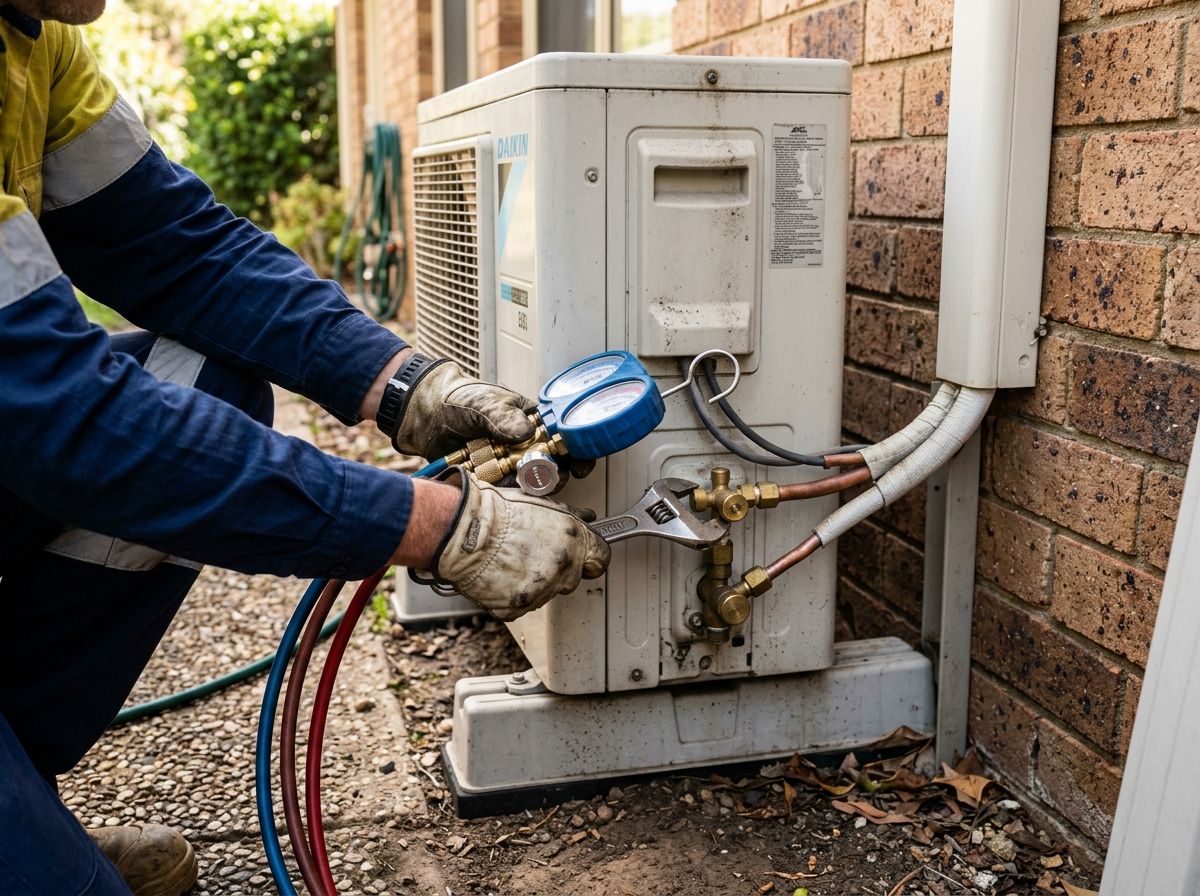
Recognition of Prior Learning (RPL) is the mechanism that allows your existing, demonstrated competence to be formally assessed against the units of a qualification. You are not starting from scratch. You are presenting evidence of what you already know and do, and having it assessed by a registered training organisation (RTO). The RTO—not RPL it—conducts the assessment and issues the qualification.
For the UEE20120, the types of evidence that typically support an RPL application include documented work history, records of completed installations, site photos, logbooks, supervisor or employer statements, and a practical assessment or trade test. RTOs offering UEE20120 RPL typically look for candidates who hold a current electrical work licence, a plumbing or gas fitting licence, or who are in the later years of an electrical apprenticeship with relevant industry experience.
Your years on the tools are not irrelevant to this process. They are the raw material for it.
How RPL Works for the Cert 2 Air Conditioning
RPL is a genuine assessment process—not a rubber stamp. The RTO will assess whether your evidence demonstrates competency against the specific units of UEE20120. For experienced split system technicians, the process typically involves several stages: an initial skills check or self-assessment, enrolment with an RTO, evidence gathering and documentation, a formal assessment (which may include a practical component), and, if any gaps are identified, targeted gap training.
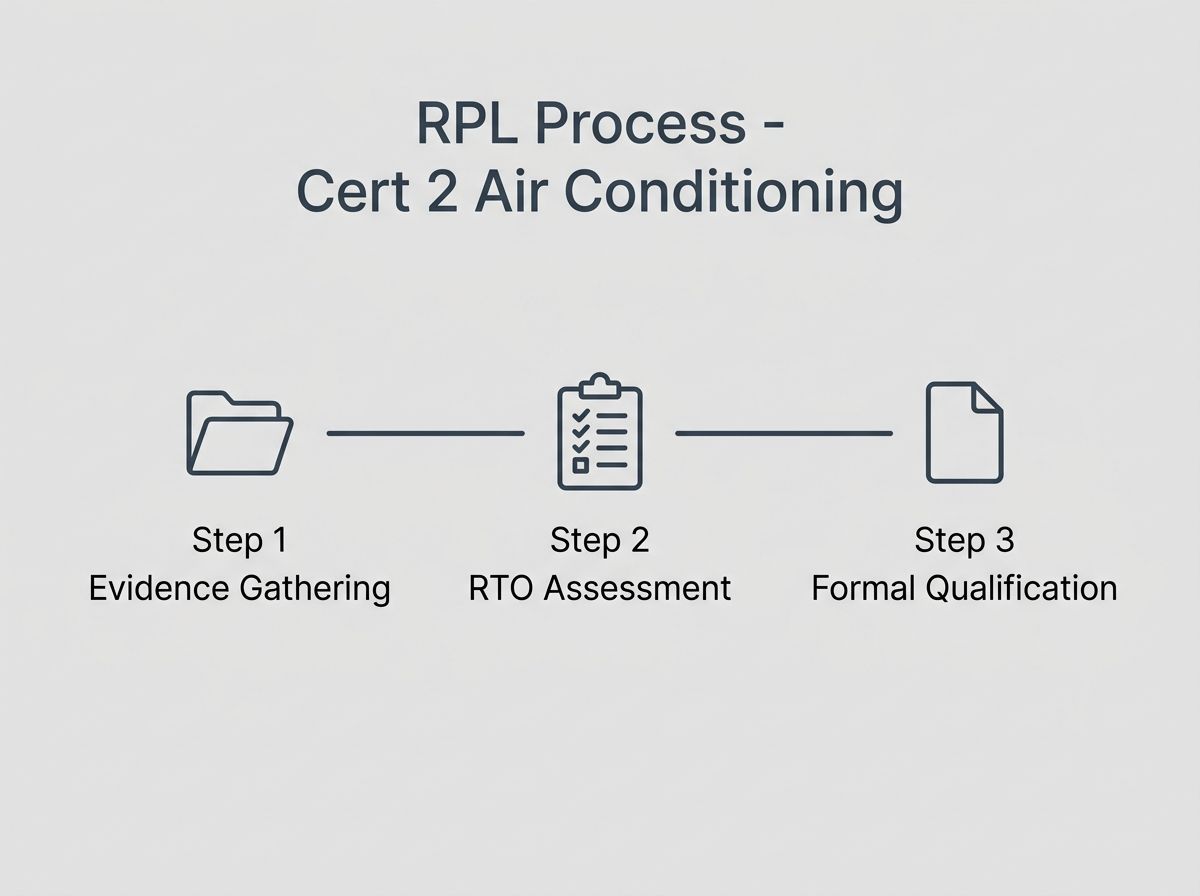
The practical component for UEE20120 can be relatively brief for candidates with strong existing skills—some RTOs indicate this can be completed over one to two intensive days. However, the overall timeline from initial contact to qualification varies depending on the RTO, the completeness of your evidence, and whether gap training is required. Gap training, if needed, is targeted to the specific units where evidence is insufficient—not a repeat of the full course. Timelines should be treated as indicative; your RTO will give you a more accurate picture based on your specific situation.
It is also worth understanding that the UEE20120 is a Certificate II qualification. For technicians with broader experience—particularly those who also service, maintain, and fault-find on split systems—the Certificate III in Air Conditioning and Refrigeration (UEE32225) may be a more appropriate target, as it unlocks the full ARCtick RAC01 licence and additional state occupational licences. An honest skills review will help clarify which qualification aligns with your experience and your employer's requirement.
The qualification is part of the UEE Electrotechnology Training Package, which sets out the competency standards and packaging rules that RTOs must follow when delivering and assessing UEE20120.
What Happens If You Do Not Have the Cert
The consequences of continuing split system work without the required qualification depend on your state and the specific nature of the work. At a minimum, performing work that requires a refrigerant handling licence without holding one may breach state licensing laws and the national refrigerant handling framework. In Queensland, for example, a refrigerant handling licence is required for any split system installation regardless of work value, and work above certain thresholds also requires a QBCC mechanical services licence.
Beyond regulatory exposure, there are practical consequences: contract non-compliance, potential insurance implications, and the risk your employer has already named—restricted from performing split system work. The urgency you feel is legitimate. The question is how to resolve it without disrupting your work more than necessary.
Employer qualification mandates are reshaping Australian trades more broadly. If you want context on how this pattern is playing out across construction and technical trades, the experience of workers in other sectors facing the same compliance moment is instructive.
The First Step: Find Out Where You Stand
Before enrolling in anything, before committing to a process, the most useful thing you can do is find out whether your existing experience is sufficient for RPL—and whether the UEE20120 is the right qualification for your situation, or whether the Certificate III is a better fit.
Not everyone will be suitable for RPL. An honest suitability assessment is the starting point—and it is the only responsible one. RPL it guides candidates through the recognition process; the assessment itself is conducted by a registered training organisation. If RPL is not the right pathway for your situation, that is worth knowing before you commit time and money to it.
The qualification page has more detail on what the UEE20120 covers and what the RPL pathway involves.
Your experience is real. Find out if it's enough for the Cert 2 Air Conditioning—the decision is yours.
Ready to Get Recognised?
Start with a free skills review to find out if RPL is right for you.